SCOTUS COULD END IT — Justices Prepared to Stop California Elections Nightmare
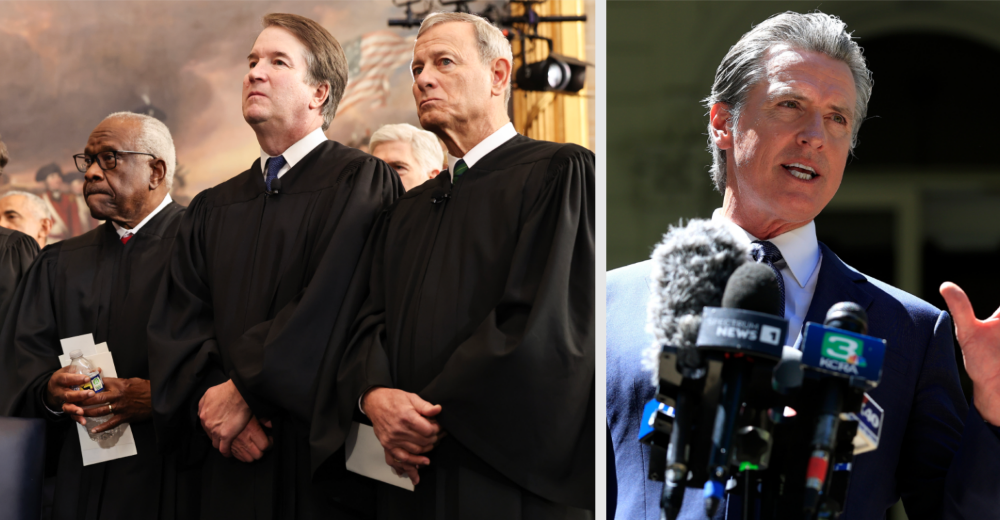
A closely watched case now before the U.S. Supreme Court could have major implications for election administration across the country, including in California and more than a dozen other states that continue counting certain mail ballots after Election Day.
The case, Watson v. Republican National Committee, centers on whether federal law permits states to count ballots that arrive after Election Day if they were mailed on or before Election Day.
The justices heard oral arguments in March and are expected to issue a decision before the end of the Court’s current term this month.
At issue is a Mississippi law that allows absentee ballots to be counted if they are postmarked by Election Day and received within five business days afterward.
Republican challengers argue that the law conflicts with federal statutes establishing a uniform national Election Day for presidential, U.S. Senate, and U.S. House elections.
Their position is straightforward: federal law sets a single Election Day, meaning ballots must be received by then to be counted.
Mississippi officials argue that states retain broad authority over election administration and that ballots cast by Election Day should still be valid if they arrive shortly afterward.
The dispute began after Mississippi enacted House Bill 1521 in 2020 during the COVID-19 pandemic. The law created a five-day grace period for absentee ballots arriving after Election Day.
In 2024, the Republican National Committee and other plaintiffs challenged the law in federal court.
While a federal district court initially upheld Mississippi’s policy, the U.S. Court of Appeals for the Fifth Circuit later ruled that federal election law preempts the state’s post-Election Day ballot receipt window.
Mississippi appealed to the Supreme Court, which agreed to hear the case last year.
The stakes extend far beyond Mississippi.
According to election law data, roughly 15 states and the District of Columbia currently allow at least some ballots to arrive after Election Day and still be counted, provided they meet postmark requirements.
That includes California, where mail ballots can be counted if they are postmarked by Election Day and received within the state’s statutory deadline of seven days afterward.
A ruling for the challengers could force states to require receipt of ballots by Election Day for all federal elections.
Supporters of that approach argue it would create a clearer and more uniform national standard while reducing prolonged ballot-counting periods that can leave election outcomes unresolved for days or even weeks.
Critics argue that such a ruling could disenfranchise voters who mail ballots on time but experience postal delays outside their control.
During oral arguments, several justices appeared focused on the meaning of federal statutes establishing a single national Election Day. Court observers noted significant questioning about whether votes received after Election Day are consistent with Congress’s decision to establish one uniform federal election date.
No decision has been issued yet, and it remains unclear how the Court will ultimately rule.
However, the outcome could become one of the most consequential election-law decisions in years.
A ruling for the challengers would likely require states to revise ballot-receipt deadlines for federal elections and could substantially reduce post-Election Day vote counting nationwide.
A ruling for Mississippi would preserve existing state flexibility and allow current ballot-receipt grace periods to remain in place.
With the 2026 midterm elections approaching, election officials, political parties, and voting-rights organizations across the country are closely watching the case.
The Court’s decision is expected before the end of June and could establish a nationwide standard governing when ballots must be received in federal elections for years to come.
While the legal dispute began in Mississippi, the Supreme Court’s ruling could have implications far beyond one state’s election laws.
Currently, a significant number of states permit some form of post-Election Day ballot receipt period. Under these systems, ballots are counted as long as they were mailed by Election Day and arrive within a specified number of days afterward.
This article may contain commentary which reflects the author's opinion.
Barron Trump Sparks Massive Online Reaction After Unexpected Update Leaves People Talking

Barron Trump Sparks Massive Online Reaction After Unexpected Update Leaves People Talking
PALM BEACH, FLORIDA — Barron Trump has once again become the subject of intense online discussion after an unexpected update tied to his name began circulating across social media, leaving many Americans curious, surprised, and eager for more details.
The headline spread rapidly, drawing immediate attention from both supporters of the Trump family and casual observers who rarely hear much about the former president’s youngest son. Because Barron Trump has remained one of the most private members of one of America’s most visible political families, any sudden mention of his name tends to attract instant public interest.
And this time was no different.
Within hours of the headline beginning to circulate, social media users flooded comment sections with questions, reactions, and speculation. Some expressed concern, others confusion, and many simply wanted to know what had happened and why Barron — who is typically kept out of the public spotlight — was suddenly being discussed so widely.

For years, Barron Trump has been a figure of unusual fascination in American media culture.
Unlike many children of high-profile political families, Barron has largely remained out of public view. He has rarely spoken publicly, made only occasional appearances at major family events, and has generally been shielded from the kind of relentless exposure that often surrounds political dynasties.
That privacy has made him something of a mystery to the public — and in the modern internet age, mystery often fuels attention.
Whenever a new image, public appearance, or headline involving Barron surfaces online, it tends to generate immediate traction. People notice because they are not used to seeing or hearing much from him.
This latest online reaction appears to follow that same pattern.
The vague and emotionally charged wording of the headline caused many users to pause, speculate, and share it before the full context was even understood. Some assumed it might involve a personal matter. Others wondered if it was related to family visibility, public life, or simply another example of internet exaggeration.Either way, the result was the same: widespread attention.
“Barron is probably the most mysterious member of that family,” one user wrote online. “Any time his name shows up in a headline, people instantly click.”
Another commenter added, “He’s been kept so private for so long that even the smallest update turns into a huge story.”
That reaction highlights a broader truth about modern digital media. Public interest is often driven not only by fame, but by rarity. And in Barron Trump’s case, his relative absence from public life has made every appearance or mention feel more significant than it might otherwise be.
He is, in many ways, an unusual public figure — someone who is instantly recognizable by name, yet still largely unknown to the broader public.
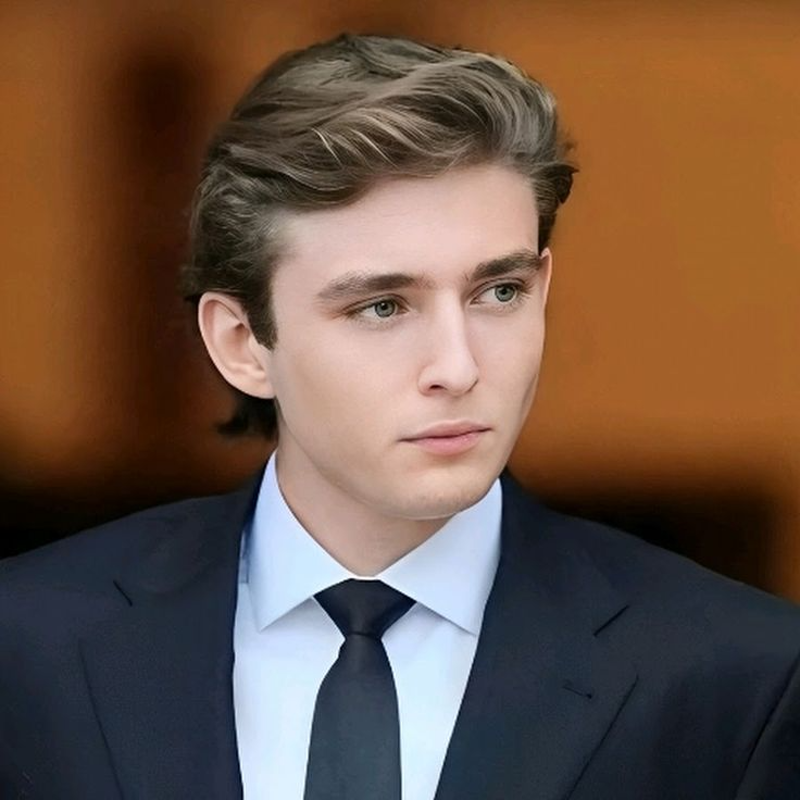
That unusual dynamic has only grown stronger as the Trump family remains a central force in American political and media culture.
Although Barron himself has not played an active political role, his position within one of the most scrutinized families in the country has made him a recurring subject of curiosity. People watch not necessarily because he is speaking publicly, but because of what his presence — or absence — seems to represent.
To some, he symbolizes privacy in a family known for visibility. To others, he reflects the challenge of growing up under extraordinary public scrutiny. And for many, he simply remains someone they have watched from a distance for years, wondering what his life is really like away from the cameras.
That is why vague headlines involving him can spread so quickly.
At the same time, the online conversation surrounding Barron also revealed something else: a growing frustration with the way social media headlines are designed to manipulate attention.
Many commenters criticized the ambiguous wording that led people to assume something dramatic or deeply personal had occurred. They argued that posts like this rely on confusion, suspense, and emotional bait rather than actual clarity.“People need to stop using young public figures for clickbait,” one user wrote. “If there’s no real information, don’t make it sound like a crisis.”
That sentiment was echoed widely, especially by those who believe Barron deserves more privacy than he has often been given by internet culture.
Unlike adult political figures who choose public life, Barron has largely been viewed as someone who has not actively sought media attention. That has led many people — including some who are not politically aligned with his family — to argue that he should be treated with more restraint and less sensationalism.
Even so, the public fascination remains difficult to ignore.
Part of that fascination comes from timing. As Barron grows older, public curiosity naturally increases. People who remember him as a child in the White House are now seeing him emerge into adulthood, and that transition alone is enough to spark attention whenever his name appears online.
There is also the broader symbolic factor. In America, the children of major political families often become subjects of projection, curiosity, and cultural storytelling. They are seen not only as individuals, but as extensions of public narratives that millions of people feel invested in.
Barron Trump is no exception.
And perhaps because he has remained so quiet for so long, every unexpected mention of him feels amplified.
For now, much of the reaction remains driven by curiosity more than clarity. People are watching, speculating, and trying to determine what — if anything — the original headline truly meant.
But regardless of the details, the moment has already demonstrated one thing very clearly: Barron Trump still commands an extraordinary amount of public attention, even without saying much at all.
That kind of attention is rare. And in his case, it is shaped less by public statements and more by silence, rarity, and the powerful curiosity that surrounds anyone connected to one of America’s most famous families.
Until clearer context emerges, the discussion is likely to continue.
And as it does, it serves as another reminder of how quickly internet culture can turn uncertainty into national conversation — especially when the name attached to that uncertainty is Barron Trump.For now, people remain curious, cautious, and deeply interested.
And in today’s media environment, that may be more than enough to keep the story alive.Rubio’s Sudden Power Shift
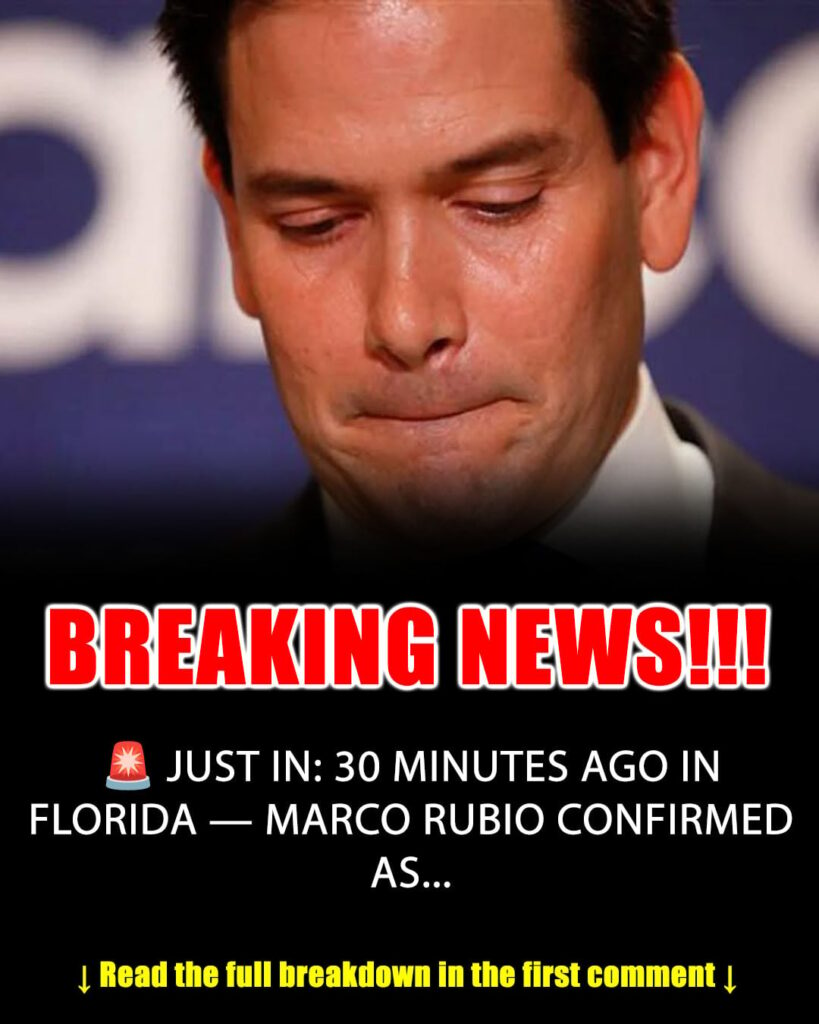
What happened in that chamber was more than a promotion for Marco Rubio; it was a recalibration of how invisible power moves through Washington. The agency he now commands doesn’t write laws or argue cases on cable news. It does something far more potent: it decides which rules ever see daylight, and which die quietly in a stack of drafts no voter will ever read. That chokepoint, once obscure, is now the battlefield where “efficiency” faces off against transparency.
In the coming months, the country will learn whether this was a safeguard or a slow-motion subversion. If Rubio opens the doors, publishes the paper trail, and subjects his own office to scrutiny, he could prove that reform and sunlight can coexist. But if key decisions vanish into closed-door reviews and unexplained delays, Americans may realize too late that the most dangerous power is the kind exercised where no one is looking.
What happened in that chamber was more than a promotion for Marco Rubio; it was a recalibration of how invisible power moves through Washington. The agency he now commands doesn’t write laws or argue cases on cable news. It does something far more potent: it decides which rules ever see daylight, and which die quietly in a stack of drafts no voter will ever read. That chokepoint, once obscure, is now the battlefield where “efficiency” faces off against transparency.
May you like



In the coming months, the country will learn whether this was a safeguard or a slow-motion subversion. If Rubio opens the doors, publishes the paper trail, and subjects his own office to scrutiny, he could prove that reform and sunlight can coexist. But if key decisions vanish into closed-door reviews and unexplained delays, Americans may realize too late that the most dangerous power is the kind exercised where no one is looking.