Chapter 4: The Truth in the Limestone

Chapter 4: The Truth in the Limestone
The trial of State versus Grant Hayes began on a hot, sticky Tuesday morning in mid-June. The courtroom was packed to capacity with reporters, financial analysts, and members of the North Dallas social circle who had spent years attending Vivian’s charity galas.
Grant sat at the defense table, wearing a dark gray suit that his lawyers had purchased for him to make him look respectable, but the three months he had spent in the county facility had taken their toll. His skin was sallow, his posture slumped, his eyes darting frantically toward the gallery where his mother sat under the supervision of a state defense attorney.
I stood at the prosecutor’s podium as the state’s special corporate counsel, my notes laid out before me with architectural precision.
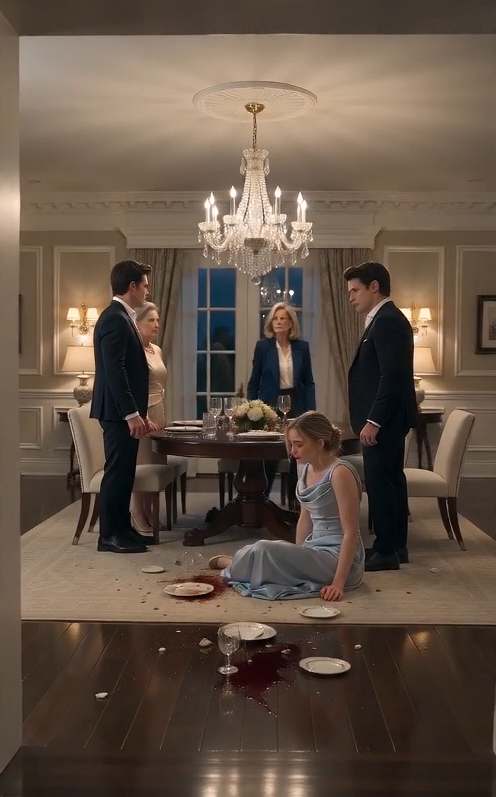
“The defense will argue, ladies and gentlemen of the jury,” I said, my voice carrying into every corner of the packed room, “that what occurred on March 14th was a simple domestic dispute. A single moment of marital frustration. They will tell you that a drop of water on a tablecloth caused a man to lose his temper.”
I pressed the remote in my hand, and the sixty-foot digital projection screen behind me came alive.
Instead of the bank logs, the screen displayed a series of medical photographs—not from March, but from June of 2024, nearly two years prior. They showed Caroline’s shoulder, covered in deep, linear lacerations that had been meticulously stitched at an out-of-state clinic in Oklahoma.
“But this isn't a case about temper, ladies and gentlemen,” I continued, my voice dropping into a low, intense frequency that held the jury’s absolute attention. “This is a case about an enterprise of cruelty. For three years, Grant and Vivian Hayes operated this marriage like a debtor’s prison. When Caroline attempted to access her father’s manufacturing files in 2024, she was pushed down a flight of stone stairs at their private estate in Austin. The medical bills were paid using cash from Vivian’s private ledger—the exact same ledger that was seized by federal marshals three weeks ago.”
Pendelton stood up, his face flushed. “Objection, Your Honor! These past events are unadjudicated allegations! They are highly prejudicial and have no bearing on the assault charge from March!”
“The state has submitted these records under the doctrine of res gestae, Your Honor,” I countered, turning directly to Judge Vance. “We are showing a systematic pattern of physical and financial coercion used to commit corporate fraud. The assault in the kitchen wasn't an isolated event; it was the enforcement mechanism of a multi-million-dollar criminal conspiracy.”
“Objection overruled, Mr. Pendelton,” Judge Vance said, her eyes fixed on the defense table with a terrifying serenity. “The evidence is admitted. Proceed, Mrs. Hayes.”
For the next four days, the state’s case tore through the defense like an automatic saw. We called Marcus Vance to the stand, who walked the jury through forty distinct digital transfers showing how Caroline’s money had been moved hours after every single physical injury she suffered. We called the general contractor from the Austin estate, who testified that Vivian had personally ordered him to repair the limestone stairs before the local police could execute a routine welfare check.
But the final blow came on Friday afternoon.
I called Vivian Hayes to the stand as a hostile witness. She walked up the steps to the witness box with her head held high, but the moment her hand touched the Bible, her fingers were shaking.
“Mrs. Hayes,” I said, stepping inside the well of the court. “On the evening of March 14th, when my daughter spilled a single drop of water on that white tablecloth, you clapped your hands. The recording verifies your words: ‘That is how she learns. Correction is necessary.’ Tell me, Mrs. Hayes, who taught you that phrase?”
Vivian’s jaw tightened, her eyes flashing with a primal, defensive rage. “It is an old family principle, Eleanor. A wife must respect the household’s leadership.”
“An old family principle,” I repeated, reaching into my leather folder and pulling out a yellowed, forty-year-old police report from the archives of the Cook County Sheriff’s Department in Illinois. “Is it the same principle that was cited in 1986, when your late husband, Arthur Hayes Senior, was arrested for fracturing your collarbone after you left a car window unrolled during a rainstorm?”
The entire courtroom went dead silent. Grant’s head snapped toward his mother, his mouth opening in absolute shock.
“Objection!” Pendelton shouted, but his voice was completely drowned out by the sudden murmur from the gallery.
“You spent thirty years hiding your own scars, Vivian,” I said, stepping closer to the box, my voice filled with a profound, deadening pity that cut deeper than any legal sanction. “You let your husband break your bones, and when he died, you didn't break the cycle. You turned your son into the very monster that had terrorized you, and you used him to break my daughter just to protect the hollow luxury of your name. You didn't clap because Caroline was careless, Vivian. You clapped because you wanted her to be as broken as you are.”
May you like



Vivian stared at the old police report in my hand, her face turning a ghastly, translucent white. The aristocratic armor she had worn for forty years didn't just crack; it dissolved into nothing, leaving behind a frail, hollow old woman who could no longer remember her lines.
She didn't answer. She covered her face with her manicured hands and began to weep—the silent, ugly tears of a woman who had finally realized that her entire life’s work was nothing but an monument to her own abuse.







