Chapter 3: The Siege of the Home Front
The civilian world thinks the military is about the noise—the artillery, the shouting, the rumble of tanks. But anyone who has spent more than a week in uniform knows the military is actually about the quiet spaces between the regulations. It’s about knowing exactly where your territory ends and where someone else’s liability begins.
For the next four weeks, my family attempted to launch a full-scale siege against my boundaries.
My phone became a hostile zone. First came the daily voice messages from my mother, shifting wildly from tearful pleas to bitter recriminations. Then came the long, rambling emails from my father, detailing Britney’s deteriorating mental health, her sleepless nights, and how the neighbors were starting to look at them because a police cruiser had parked outside their driveway twice in one week.
Britney herself remained completely silent. She didn't call. She didn't text. She had always used our parents as her forward deployment team, letting them clear the obstacles while she sat in her room, consuming their savings and rewriting the narrative to make herself the victim.
By the end of the month, the situation escalated. I was sitting in my off-base apartment in Colorado Springs, sorting through my gear for an upcoming mountain training exercise, when a heavy knock rattled the front door.
I wasn't expecting a delivery. I opened it to find my father standing on the concrete breezeway.
He looked older. The line of his shoulders was stooped, his hair uncombed under a faded Denver Broncos cap. He had driven five hours south down Interstate 25 without warning, his old truck parked crookedly near the complex dumpsters.
"Dad," I said, holding the door open. "What are you doing here?"
He didn't answer right away. He walked into my small, neat living room—a space with nothing on the walls but a framed unit guidon and a topographical map of the Fort Carson training sectors. He sat down on my plain gray sofa like his knees had suddenly stopped working.
"We had to take out a second mortgage, Nathan," he said, staring at his worn leather boots.
I closed the door and stayed standing near the kitchen counter. "For what?"
"The retainer," he whispered. "A criminal defense attorney in Denver wanted ten thousand dollars up front just to take Britney’s case. The district attorney is refusing to drop the identity theft charge to a misdemeanor because she used government-issued documents from your deployment file. They’re calling it aggravated identity theft."
"She committed a felony, Dad," I said, my voice flat. "Against her own brother. While I was sitting in the hospital getting a burn treated that she gave me."
My dad finally lifted his head, his eyes red-rimmed and watery. "She’s your sister, Nathan! Yes, she’s reckless. Yes, she’s spoiled. Your mother and I know we made mistakes with her. We shielded her too much. But you... you’re built like iron. You always have been. You went off to the academy, you got your commissions, you got your regular paychecks. You don't know what it's like to flounder."
I walked over to the sofa, sitting down in the armchair opposite him. I didn't pull down my collar to show him the lingering discoloration on my jawline, but I didn't hide it either.
"You think I don't know what it’s like to flounder?" I asked, my voice dropping into that quiet, heavy register that always made my soldiers sit up straight. "When I was deployed to Poland in '21, I was responsible for an eighty-million-dollar equipment ledger. Two containers of night-vision gear went missing from the manifest because a local transport company falsified the shipping bills. If I hadn't spent forty-eight hours straight tracing the digital signatures and locking down the supply routes, the army wouldn't have said, 'Oh, Nathan is built like iron, let's forgive him.' They would have broken my life."
My dad shook his head. "That's work, Nathan. This is family."
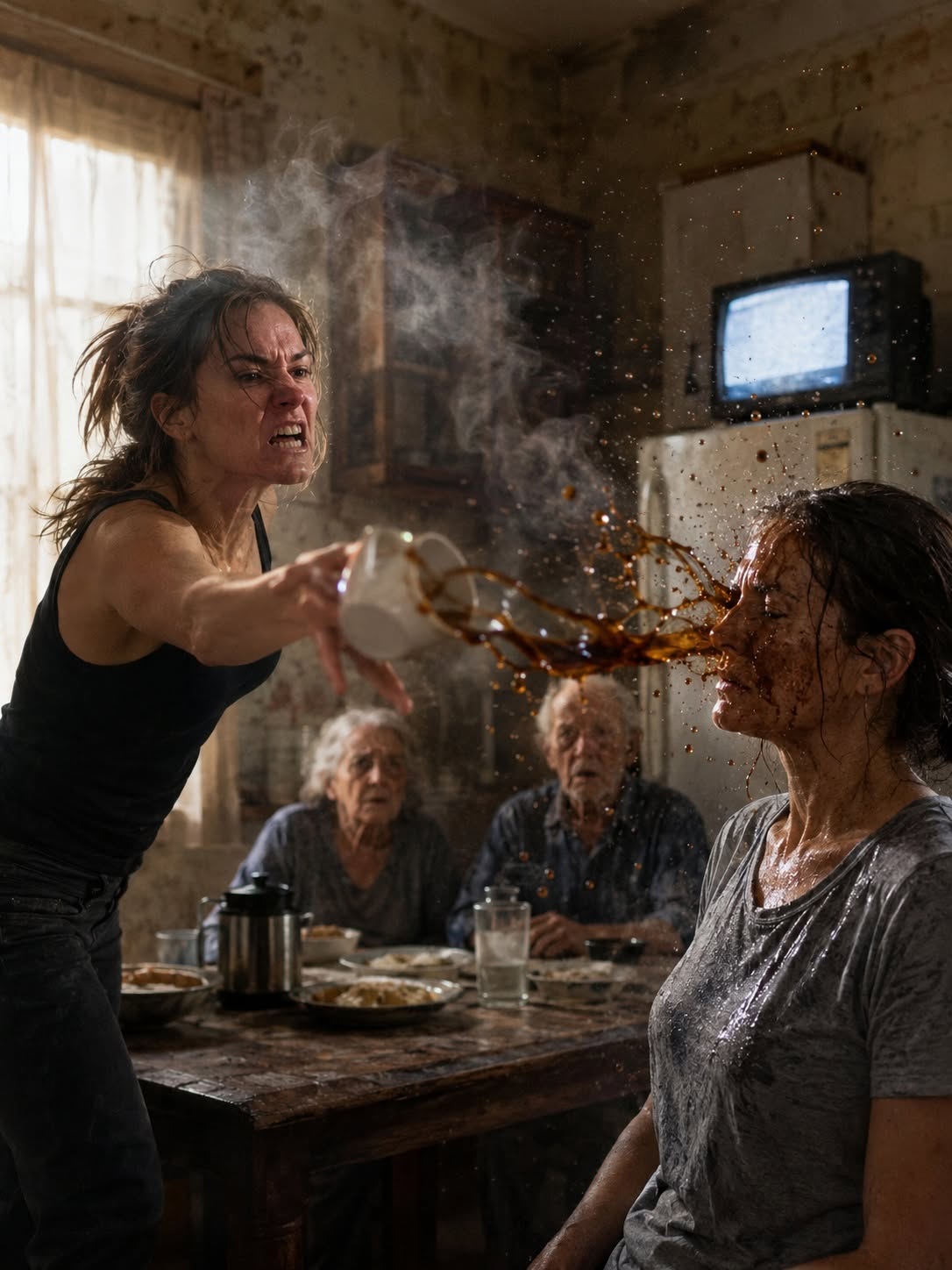
"It's the same thing, Dad," I said, leaning forward, my hands resting on my knees. "The rules don't stop working just because you share a kitchen table. Britney didn't just try to borrow my credit. She tried to steal my identity to bypass a system because she didn't want to accept the word no. And when I told her no, she threw boiling liquid at my face. If a private did that in my motor pool, they’d be in a brig by noon."
My dad stood up, his face tightening with a sudden, desperate anger. "So that's it? You're just going to let her go to prison? You're going to let your mother cry herself to sleep every night until she has a stroke? You’re the only one who can sign the non-prosecution agreement the defense lawyer drafted!"
He reached into his jacket pocket and pulled out a folded white document, slamming it down on my coffee table like a weapon.
"Sign it," he commanded, his voice trembling. "For your mother. For me. Just sign it and let us clean up the mess."
I looked at the document. It was a beautifully drafted statement, full of legal jargon claiming that the entire incident was a communication breakdown within the family, that I had provided the deployment folder voluntarily, and that I wished for all state and federal investigations to cease immediately.
If I signed it, the pressure would stop. My phone would go quiet. My mother would go back to sending me recipes, and my father would stop driving down the highway in the middle of the night to stare at my floorboards.
But if I signed it, I would be validating every lie Britney had ever told about me. I would be confirming that my career, my clearance, and my physical safety were secondary to her convenience.
Slowly, without taking my eyes off my father, I picked up the paper, folded it back along its original creases, and handed it right back to him.
May you like
"No," I said.
My father looked at the paper in his hand, then at me. For a long, terrible second, I thought he was going to swing at me. Instead, his shoulders collapsed completely. He turned around, walked out of my apartment, and slammed the door so hard the framed guidon on the wall tilted three inches to the left.