Chapter 2: The Silent Assessment
Chapter 2: The Silent Assessment
The sterile, blinding white lights of the University of Colorado Hospital emergency room usually provided a strange sense of comfort to me. In the trauma bay, lines were clearly drawn. Life and death battled openly on the stainless-steel tables, and the enemy was always obvious—a severed artery, a failing heart, a blunt-force trauma from a highway collision. But as I sat in the staff breakroom at 3:00 a.m. a week after Clara returned from Salt Lake City, the quiet hum of the vending machines felt like a mockery.
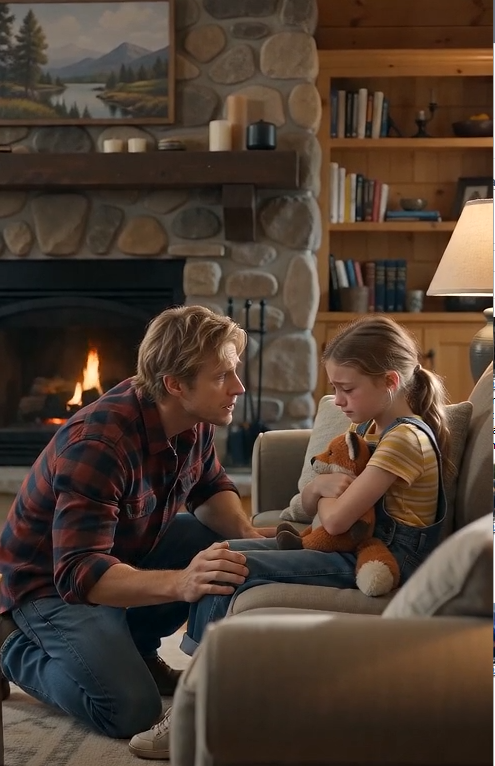
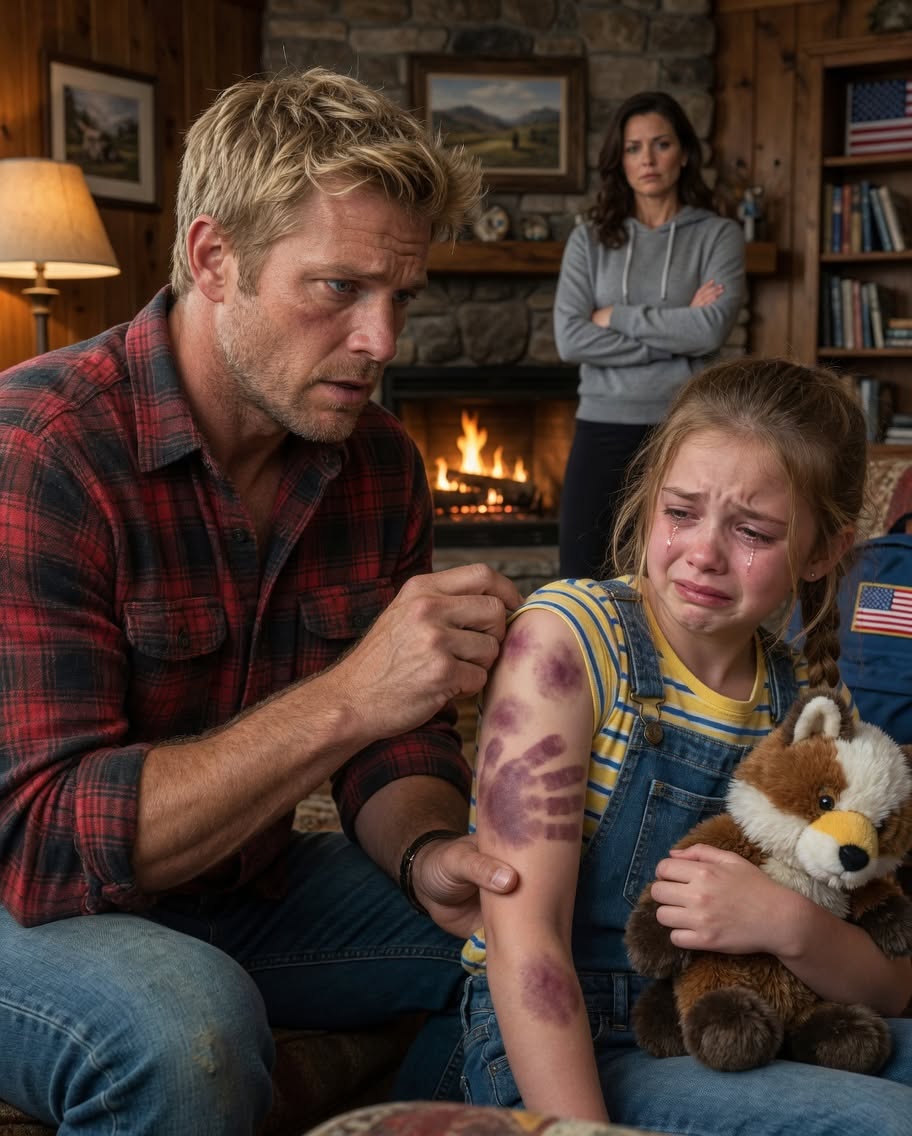
I couldn't shake the image of those five purple bruises on Harper’s small arm.
As an ER nurse, I am a mandated reporter. The law in Colorado is uncompromising, and my personal ethics are even stricter. The moment you see an adult’s handprint bruised into a seven-year-old child's flesh, you call Child Protective Services. You file the paperwork. You protect the victim.
But I was trapped in a psychological minefield. The hand that left those marks belonged to Clara—the woman I had married just three months ago, the elegant, soft-spoken graphic design executive who spent her weekends baking artisan bread and volunteering at the local animal shelter. If I filed a report without absolute, ironclad proof, Clara would wrap herself in her immaculate reputation, paint me as an unhinged, paranoid stepfather who was overreaching after a few weeks of marriage, and vanish into the legal system with Harper. Harper would be isolated completely, and the "fire" she whispered about would devour whatever childhood she had left.
I needed to see the architecture of the house when the curtains were closed. I needed to understand what Clara meant when she looked at Harper not like a mother looking at her daughter, but like a prison warden monitoring a high-risk inmate.
The opportunity came on a rainy Tuesday afternoon. My shift ended at noon, and Clara was scheduled to host a major corporate presentation downtown until 6:00 p.m. Harper's school bus dropped her off at 3:30 p.m. I arrived at the Hawthorne Avenue house early, the old floorboards groaning under my boots as I walked through the empty Victorian hallways.
The house was too perfect. Every cushion on the velvet sofa was precisely chopped in the center. The copper pots in the kitchen hung like a row of surgical instruments. There were dozens of framed photographs on the mantelpiece, but as I studied them closely for the first time, a cold realization settled in my chest.
In every single photo, Clara was the center of the frame. She was laughing on a beach in Maui, she was receiving an award at a design gala, she was posing on a hiking trail in Vail. Harper was always tucked into the margins, her small face partially obscured, her eyes never looking directly at the camera. In the vocabulary of trauma, this wasn't a family archive. It was a monument to Clara, with a prop child added for scenic balance.
At 3:35 p.m., the front door clicked open. Harper walked into the foyer, dragging her heavy pink backpack behind her. The moment she saw my old pickup truck in the driveway, her posture had stiffened, but when she found me sitting at the kitchen island with a plate of fresh apple slices, her shoulders dropped a fraction of an inch.
"Hey, kiddo," I said gently, keeping my hands visible on the countertop. As a rule, terrified patients need to see your hands at all times; hidden limbs imply hidden threats. "How was second grade?"
"Fine," she whispered, her voice barely rising above the patter of the rain against the window. She didn't move toward the apples. She stood by the umbrella stand, clutching Scout the stuffed fox against her chest like a shield.
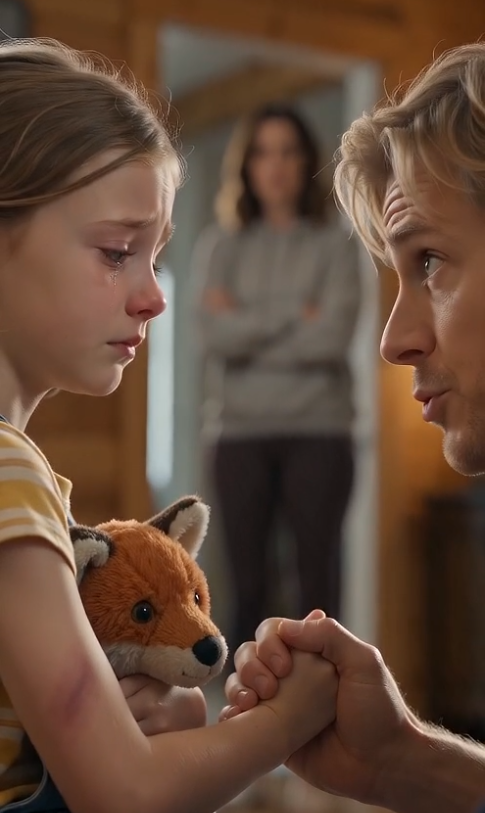
"Your mom is going to be late tonight," I said, keeping my tone perfectly conversational. "I was thinking we could order pizza. Thin crust, extra cheese. What do you think?"
Harper didn't answer. Her gray eyes darted toward the hallway ceiling, toward the master bedroom upstairs, as if checking for hidden cameras or listening devices. The level of hyper-vigilance in a seven-year-old was heartbreaking. It was the exact survival response I saw in soldiers returning from combat zones—the constant, exhausting scanning of the environment for an imminent explosion.
"Ethan?" she said softly, her voice trembling so slightly I almost missed it.
"Yeah, Harper?"
She took three slow, deliberate steps into the kitchen. Her small fingers reached into the side mesh pocket of her backpack. She didn't pull out a toy or a school drawing. She pulled out a small, crumpled piece of lined notebook paper, folded tightly into a tiny square no larger than a postage stamp.
"Mommy said if I ever showed anyone, she would burn Scout," Harper whispered, her eyes filling with large, silent tears that spilled over her eyelashes. "She said the fire takes away things that don't behave. But... but you said you work in trauma. You said you don't leave."
My heart hammered against my ribs like a trapped bird. I knelt down on the linoleum floor, bringing myself down to her eye level, maintaining a respectful distance. "I don't leave, Harper. Not ever. You can show me."
With a trembling hand, she extended the tiny square of paper.
I unfolded it carefully, my fingers smoothing out the deep creases. It wasn't a child's drawing. It was a calendar log written in Clara’s elegant, precise cursive script, hidden on the back of an old grocery receipt.
October 14: H broke a glass. Reset protocol administered. 5 minutes.
October 22: H cried during dinner. Level 2 grip applied. Isolation required.
November 3: H spoke out of turn to Ethan. Total restriction until behavior stabilizes.
The clinical, detached language made my stomach turn over. "Reset protocol," "Level 2 grip"—Clara wasn't just losing her temper. She was systematically tracking her emotional and physical abuse of her own daughter like a scientist logging entries in a laboratory notebook. The five bruises I had seen on Harper’s arm matched the date of the "Level 2 grip" entry perfectly.
Before I could process the sheer horror of the document, the heavy brass lock on the front door clicked and turned.
Clara walked into the house, her designer trench coat damp from the rain, her perfect, brilliant smile already pinned to her face. "Ethan? Sweetheart, I managed to escape the presentation early! I thought we could all go out for—"
May you like



She stopped dead in the kitchen doorway. Her eyes dropped to the linoleum floor, where I was still kneeling in front of Harper, the tiny piece of lined paper still open in my hand.
The transformation on Clara’s face was instantaneous and terrifying. The warmth drained from her eyes, replaced by an icy, predatory focus that made her look like an entirely different person. The mask didn't just slip; it completely shattered.







