Chapter 2 - The Logic of Ice and Silk
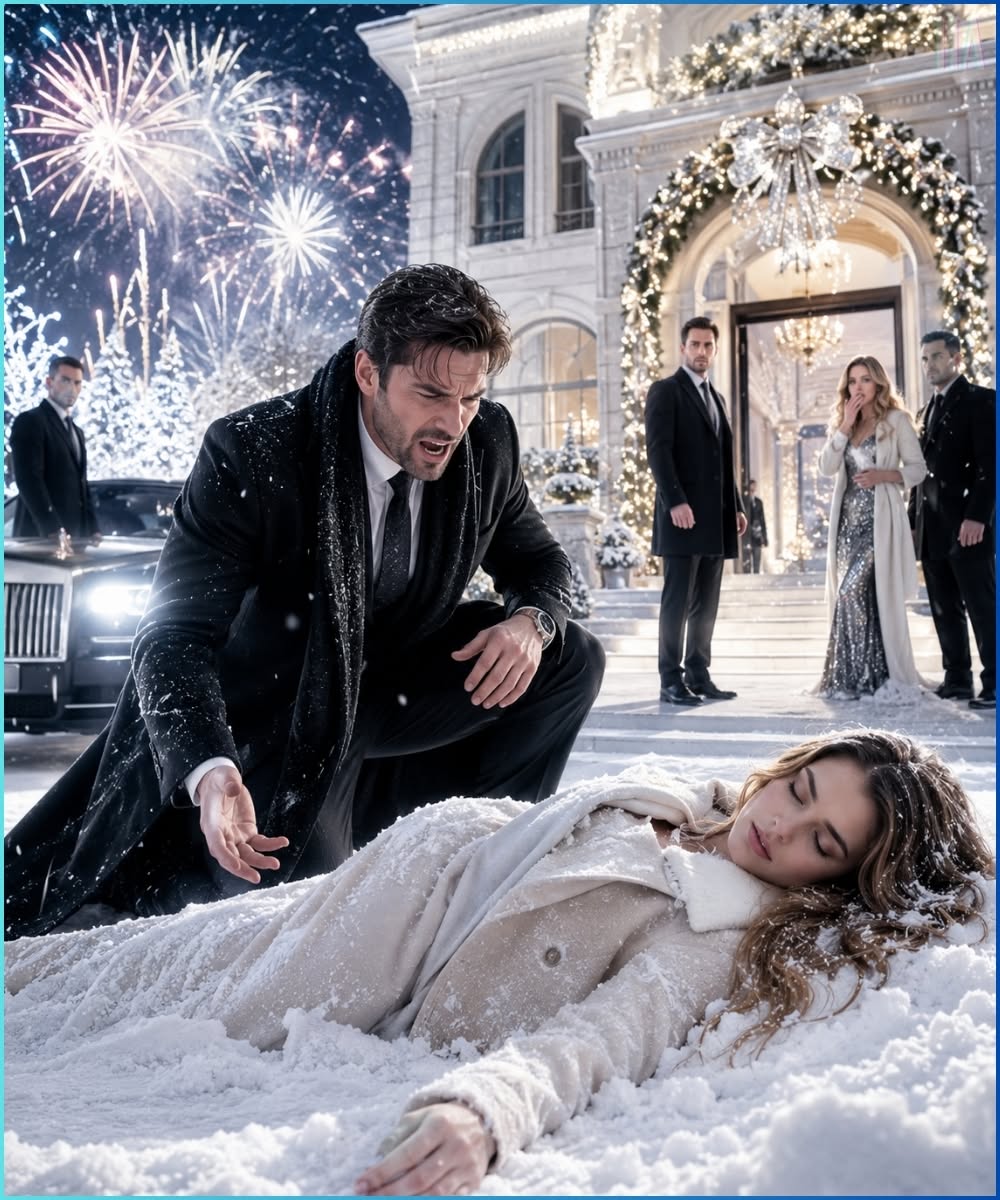
Marco DeLuca didn't enter the office; he lingered in the doorway like a shadow that couldn't decide whether to stick to the wall or cross the floor. His tuxedo was tailored to hide the slight distortion at his left arm—a souvenir from a territory dispute in Detroit a decade ago. He smelled of high-grade tobacco and the expensive scotch Dominic kept in the private lounge upstairs.
"Mr. Moretti left these before he went up," I said, my voice sounding thin even to myself. I pointed a finger toward the neat stack of documents. "The freight manifests for the Calumet harbor terminal. There was a discrepancy in the customs clearance stamps for the third quarter. I didn't want him starting the new year with a regulatory hold on the shipping lanes."
Marco let out a low, rough sound that might have been a laugh if he were a man capable of amusement. He walked forward, his polished shoes silent on the thick Persian rug, and looked down at the paperwork. "You're a rare creature, Emma. Most girls in this city see the name Moretti on a building and they think about diamond bracelets and front-row seats at the opera. You look at it and you think about port authority regulations."
"Bracelets don't keep the lights on, Mr. DeLuca," I replied, adjusting my glasses. My fingers were already stiff, though I hadn't realized how cold the office had grown. The heating system in the tower was programmed to reduce output to the administrative floors after 6:00 PM on holidays to conserve energy for the penthouse suites above.
"Dominic doesn't expect you to freeze for the company," Marco murmured, his eyes scanning the yellow sticky note in Dominic’s handwriting. Handle when you can. D.M. "Go home, Emma. The city is shutting down. The weather advisory on the radio says the lake effect is bringing in six inches before midnight. If you stay much longer, you won't find a cab between here and Lincoln Park."
"I just have the final cross-references to input into the ledger," I said, forcing a polite smile. "It will take twenty minutes. Happy New Year, Mr. DeLuca."
He stared at me for three seconds too long, his hand resting on the edge of my mahogany desk. There was an expression in his eyes I couldn't quite read—something heavy, like the gray clouds hanging over the Chicago River outside. "Don't look for logic in this building tonight, kid. Just do your work and get out."
He turned and left, the heavy oak doors clicking shut behind him.
The twenty minutes turned into an hour. Then two.
By the time the grandfather clock in the corner chimed 11:15, the numbers on my screen were beginning to blur into a gray haze. The heat had died completely. My breath formed a faint white mist when I exhaled. I reached for my coat—a camel wool blend I’d bought on sale at Marshall Field’s three seasons ago—and pulled it over my shoulders. The lining was thin, intended for a brisk autumn walk, not the sub-zero wind that traveled down from Canada and turned the streets into a meat locker.
When I stepped into the private elevator, the building felt entirely different. The music from the top floors was no longer a distant hum; it was a physical vibration that rattled the brass handrails. When the doors slid open into the main lobby, the air smelled of melted wax, expensive perfume, and the cold draft coming through the rotating doors.
The night watchman, an older man named Carl who usually gave me a peppermint from his desk drawer, was missing. In his place stood two young men I hadn't seen before. They wore dark overcoats over their suits, their hands tucked into their pockets in a way that suggested they were holding something heavier than car keys.
"Miss Clarke?" one of them asked, stepping into my path as I moved toward the exit. He had a small scar through his left eyebrow and an accent that belonged to the south side of the city.
"Yes," I said, pulling my scarf tighter around my neck. "I'm leaving for the night."
"Mr. Moretti’s brother said you were supposed to leave your security badge at the desk before you go," the man said. His voice was flat, devoid of the normal courtesy the staff usually extended to the executive office.
I frowned. "Gianni? Why would Gianni want my badge? I need it to access the administrative archives on Monday."
"We don't ask questions, Miss," the second one said, stepping closer. "We just take the badge. Orders from the family."
A small prickle of unease started at the base of my neck. Gianni Moretti was Dominic’s younger brother—a man who spent more time in the casinos of Atlantic City than the offices in Chicago, yet always seemed to have an opinion on how Dominic ran his business. He had looked at me for two years with an irritation he didn't bother to hide, as if my presence outside Dominic’s office was a personal insult to his family's lineage.
"If Mr. Moretti wants my badge, he can ask me for it on Monday morning," I said, attempting to step around them.
The first man didn't move his feet, but his shoulder blocked my path. His hand came out of his pocket, his fingers wrapping around the lanyard of the security card hanging from my neck. With a quick, brutal jerk, he snapped the plastic clip. The edge of the lanyard bit into the skin of my throat, leaving a sharp, burning line.
"The family says you're done, Miss Clarke," he said quietly, dropping the card into his pocket. "The elevator is restricted. The garage is closed. The back exit is locked. Use the front door and don't come back."
The words didn't make sense. I had worked eighty hours a week for two years. I had kept secrets that could put senators in federal prison. I had never stolen a dime, never missed a deadline, never looked Dominic Moretti in the eye for longer than it took to take an order.
"Did Dominic... did Mr. Moretti sign this order?" I asked, my voice trembling now, not from the cold, but from the sudden, terrifying realization that the ground beneath my feet was gone.
"Mr. Moretti is upstairs drinking hundred-dollar champagne with the mayor's daughter," the man said, pointing toward the heavy glass doors that led to the street. "He doesn't care about the help. Out."
The wind hit me the moment I cleared the threshold.
It wasn't just cold; it was violence. The lake effect wind tore down the canyon of Michigan Avenue, carrying sharp needles of ice that scratched at my cheeks. The temperature on the bank sign across the street read minus fourteen degrees. Within three steps, the thin wool of my coat felt like nothing more than tissue paper.
I looked for a cab. The street was a white desert. The yellow lights of the city buses were nowhere to be seen, their routes cancelled hours ago due to the whiteout conditions. My phone, which had been at forty percent when I left my desk, died instantly in the extreme cold, the screen flashing once before turning into a useless piece of black glass.
Just walk to the train, I told myself, my boots crunching into the drifts that had already piled six inches deep against the granite face of the Moretti Tower. It’s only four blocks. Four blocks to the Red Line.
But the snow wasn't just falling; it was swirling in great, blinding sheets that obscured the street lamps. By the second block, I couldn't see my own hands. My toes had gone from burning to numb, and the air entering my lungs felt like broken glass. I stumbled, my heel catching on an invisible ridge of ice beneath the drift, and went down hard on my knees.
The cold didn't hurt anymore. That was the first mistake I made.
I sat back against the stone base of a planter box outside the entrance of a closed department store. The snow was piling around my waist, soft and heavy, like a down comforter my grandmother used to keep on the guest bed in Maine. The sound of the wind began to fade, replaced by a low, rhythmic hum that sounded remarkably like the jazz quartet playing forty floors above me.
May you like



Just five minutes, I thought, my chin sinking into the wet wool of my scarf. Dominic will be counting down the midnight toast soon. The mayor's daughter will be laughing. And the manifests are perfectly filed.
The white darkness pulled me under before the bells could ring.







