Chapter 4: The Fall of the House of Whitman
Chapter 4: The Fall of the House of Whitman
The federal courthouse in downtown Dallas was a monument to old Texas money—all white marble, polished mahogany, and high glass ceilings that reflected the blazing southern sun. The courtroom assigned to the Whitman Trust dispute was packed with local journalists, former business associates, and high-society vultures who had arrived to watch the ultimate public execution of the Whitman family name.
Arthur Whitman sat at the defense table, looking like a ghost of his former self. His expensive suit looked baggy, his face pale and sunken, his eyes bloodshot from weeks of sleepless nights in a federal holding facility. Beside him sat Patricia, her aristocratic posture completely gone, her head lowered, her hands shaking as she clutched a cheap plastic binder. They could no longer afford their high-priced defense team; they were surrounded by junior associates from a mid-tier firm who looked visibly terrified of the legal storm they had walked into.
Across the room sat my team. Vanessa Vance stood at the podium, flanked by two senior partners from the toughest estate litigation firm in Texas. I sat in the center, wearing a simple, high-necked navy blue dress, my face calm, empty of any fear or hesitation.
The judge, a formidable woman named Sandra Albright, banged her gavel, bringing the room to a dead silence.
"We are here to hear the emergency motion filed by Arthur Whitman regarding the dependent equity execution of the 1994 Charles Whitman Trust," Judge Albright announced, looking over her spectacles at my father's legal team. "Counselor, present your argument."
The junior associate stood up, his voice cracking slightly. "Your Honor, we argue that under Section 12 of the original 1994 trust structure, the patriarch Arthur Whitman retains historical execution control over the family's legacy liquid assets, regardless of the marital updates made by the late Daniel Hayes. The current freeze on these funds is causing immediate, irreparable financial ruin to the surviving elders of the family."
Vanessa Vance stepped up to the podium before the judge could even respond. Her movement was fluid, lethal, and entirely professional.

"Your Honor, the defense’s argument is not only irrelevant; it is legally fraudulent," Vanessa declared, her voice echoing with absolute authority through the high-ceilinged room. "We submit into evidence the certified, original 1996 codicil to the Charles Whitman Trust, recovered from the Capital Bank of Texas vault three days ago."
She handed a ancient, wax-sealed parchment folder to the bailiff, who passed it to the judge.
My father turned his head slowly toward me, his eyes wide with a sudden, frantic panic. He had never known about the codicil. My grandfather had hidden it from him for thirty years, waiting for the exact moment his corruption would catch up with him.
Judge Albright scanned the document, her expression turning from professional neutrality to a cold, hard glare directed straight at my father.
"This document is flawless and fully notarized," Judge Albright said, her voice dropping like a guillotine. "According to the explicit instructions of Charles Whitman, the moment Arthur Whitman engaged in financial impropriety or corporate tax fraud—which has now been confirmed by a federal grand jury indictment—his execution rights over this trust are instantly and permanently terminated. The entire estate, including the equity of the Dallas mansion and all historical family assets, is transferred into the sole, independent control of Claire Whitman Hayes."
My mother let out a sharp, choked gasp, burying her face in her hands as a collective murmur exploded through the courtroom gallery.
"Furthermore," Judge Albright continued, banging her gavel with immense force, "based on the criminal wire fraud charges currently pending against Arthur Whitman in the state of Ohio, this court orders the immediate seizure and liquidation of all remaining Whitman corporate assets, to be managed entirely by the plaintiff, Claire Hayes, for the purpose of federal restitution."
Arthur Whitman stood up weakly, his hands gripping the edge of the table as he looked across the room at me. His voice was a pathetic, broken whisper. "Claire... please. You're stripping us of everything. We'll be homeless. We have nothing left."
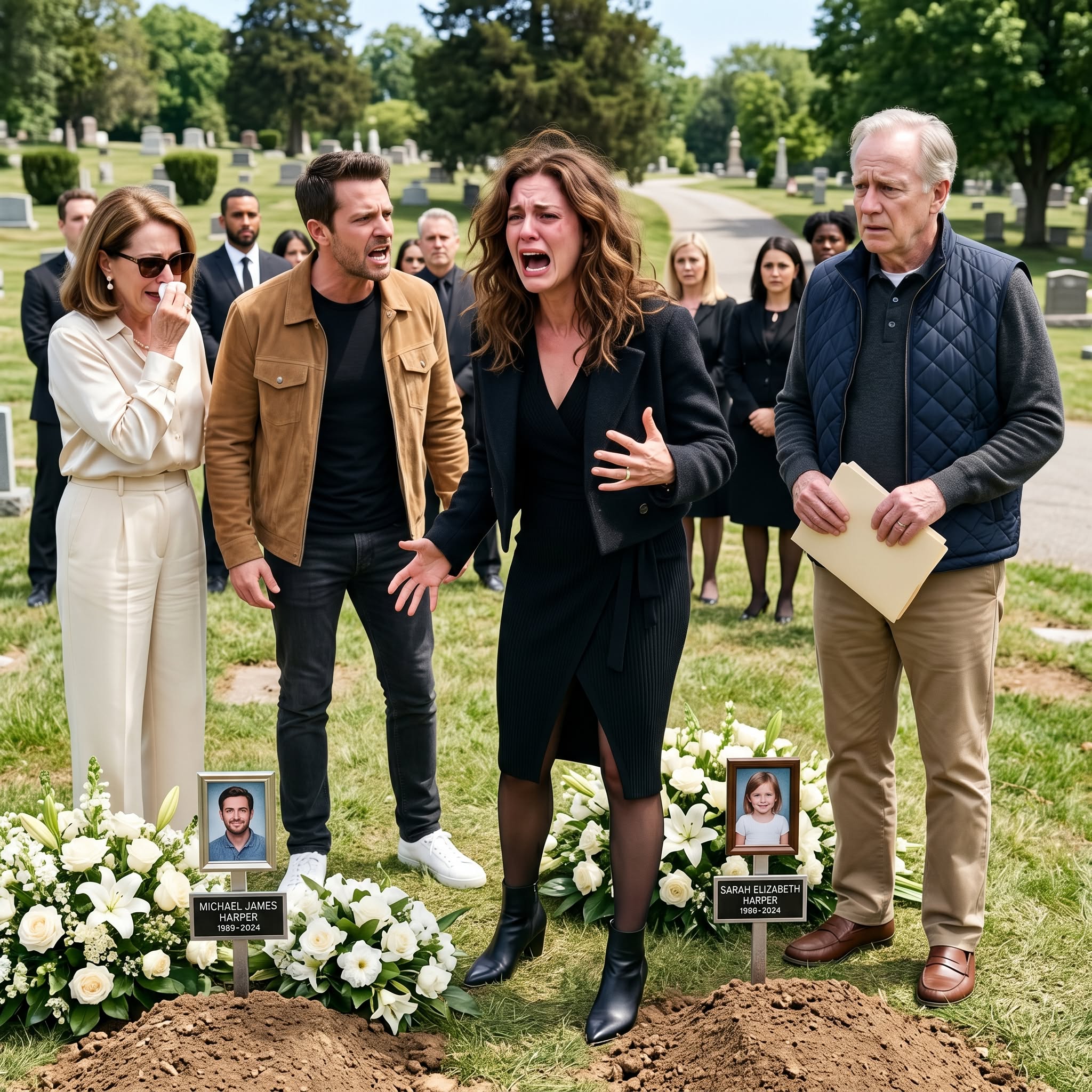
I stood up slowly, facing the man who had called my daughter’s funeral "too trivial" to attend. I didn't yell. I didn't cry. I spoke with the quiet, devastating power of a mother who had walked through hell and come out holding the keys to his kingdom.
May you like



"You told me I was thirty-four, Dad," I said, each word echoing through the silent courtroom. "You told me accidents happen, and that I should just learn how to rebuild. Now it's your turn. You can rebuild your life inside a federal prison cell. Don't look at me for mercy. I buried my mercy under a gray sky in Columbus, right alongside my husband and my child."
I turned my back on them, walking down the center aisle of the courtroom while the cameras flashed and the journalists scrambled to file their stories. Behind me, the federal marshals stepped forward, placing their hands on Arthur Whitman’s shoulders to lead him away in handcuffs. The House of Whitman had fallen, completely obliterated by the truth they had spent a lifetime trying to hide.







