Chapter 2 - The Sound of Truth
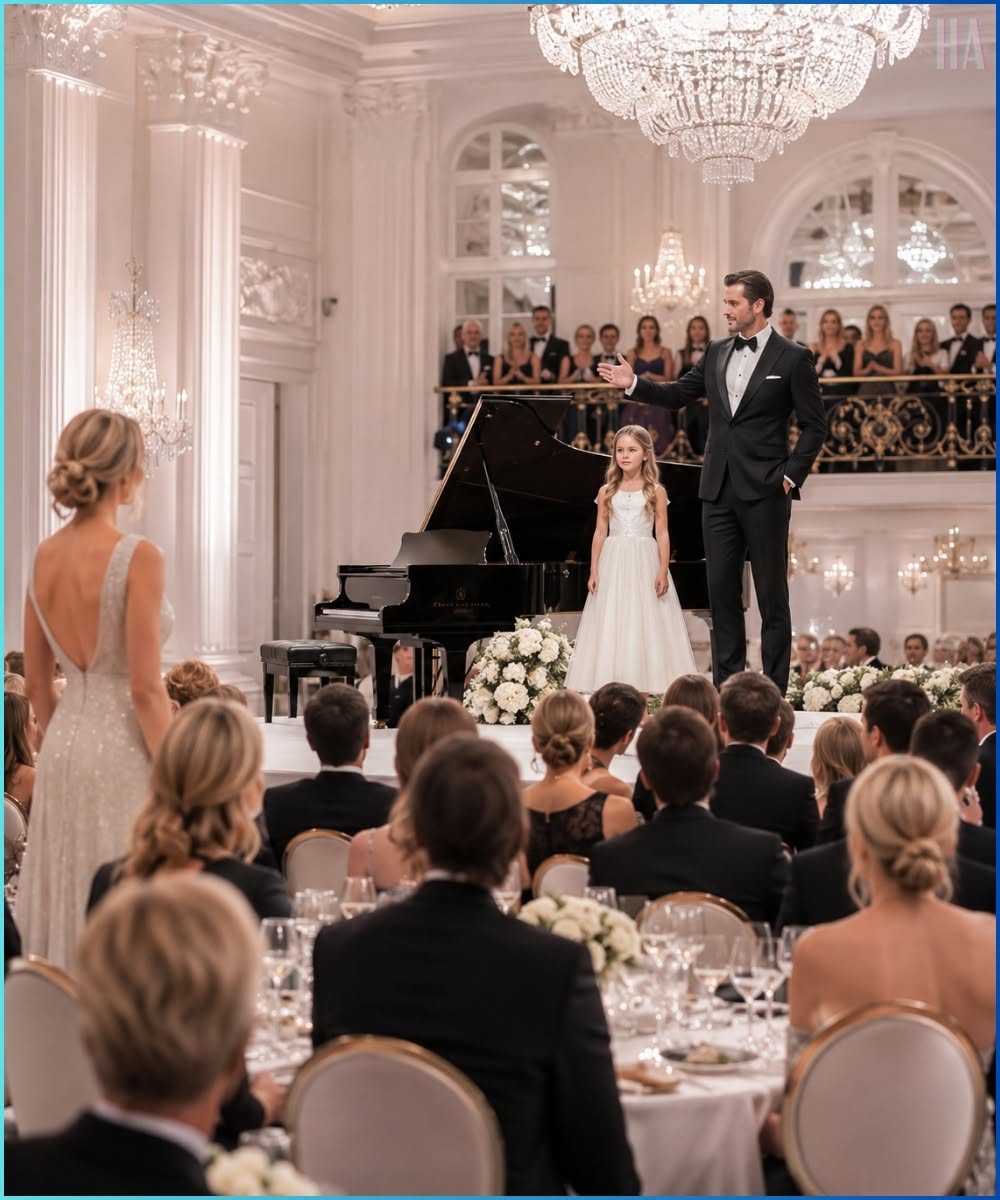
The microphone screeched slightly as Lawson Fletcher adjusted it, the sharp frequency cutting through the heavy air of the Westridge Preparatory auditorium. He stood tall, adjusting the lapels of his tailored charcoal suit, exuding the casual confidence of a man who bought institutions the way ordinary people bought groceries. He flashed his signature charismatic smile—the one that had graced the covers of tech magazines and funding brochures across the Pacific Northwest.
“Thank you, Principal Morrison,” Lawson began, his voice deep, resonant, and practiced to perfection. “When Fiona and I first walked through these halls, we saw a community of immense potential. But art requires an arena. It requires resources. And as I look out at this crowd today, and as I look at my daughter, Meadow, who will be performing her ballet routine shortly, I know that every dollar invested here is a down payment on a legacy.”
In the back row, I swallowed the lump of bile rising in my throat. A legacy. Lawson had always been obsessed with what he left behind, yet he had utterly abandoned the present we had once shared.
He leaned closer to the microphone, his eyes sweeping across the front rows, completely blind to the shadows at the very back where I sat huddled in my faded consignment cardigan. “We live in a world of variables,” Lawson continued, his tone shifting into the pseudo-philosophical cadence he used for keynote speeches. “But family is the constant. Everything I build, every milestone Fletcher Technologies reaches, is singular in its focus. To give my one and only child, Meadow, a world where her talents can flourish without limits.”
Again, the word echoed through the rafters: One and only.
The audience erupted into a synchronized wave of polite, wealthy applause. Next to Lawson, Fiona Laurent beamed, her diamond tennis bracelet catching the stage lights as she clapped with delicate, manicured precision. Little Meadow sat straight, her chin lifted with the proud, inherited posture of a child who had never known a door to be closed in her face.
I looked down at the crumpled program in my lap. Number fourteen: Ruby Castellano – Chopin’s Nocturne in C-sharp minor.
The performances began. A string quartet of seventh graders played a slightly out-of-tune Vivaldi piece. A boy in an oversized tuxedo played the cello with earnest, sweating intensity. Then, the lights dimmed to a dramatic, icy blue, and Meadow Fletcher was called to the stage.
She was magnificent. I couldn’t deny it, nor did I want to harbor bitterness toward a child. Meadow moved across the glossy stage like a slip of silver silk, her ballet leaps fluid and precise, a testament to thousands of dollars of private coaching and elite genetics. Lawson didn't look at his phone once. He watched her with a fierce, possessive pride that made my throat tighten. He was a good father to her. He was the father he had sworn to me he could never be.
“Children derail everything, Clara,” his voice echoed from a memory twelve years old, spoken over a cracked laminate kitchen table in our damp apartment. “I need every scrap of energy to get the seed funding. If we have a kid now, we’re trapped in poverty forever. I can't do it.”
I hadn't argued then. I had packed my bags while he was at a meeting with his first major venture capitalist, leaving behind a positive pregnancy test on the counter because I knew—with the absolute certainty of a woman who loved a man too much to watch him grow to hate her—that he would choose his algorithms over our baby. By the time he noticed I was gone, his company had gone public, his phone number had changed, and my pride had hardened into an impenetrable wall.
Meadow finished her routine with a flawless pirouette. The room went wild. Lawson stood up, cheering loudly, throwing a bouquet of white roses onto the stage. Fiona kissed her fingertips and waved. It was a picture of the perfect American dynasty.
“Thank you to Meadow Fletcher,” Principal Morrison’s voice boomed over the speakers as the stage crew quickly rolled out the nine-foot Steinway grand piano—the very piano bearing a brass plaque with Lawson’s name engraved upon it. “Next, we have a very special performance. A young lady who joined us this semester on our prestigious Vanguard Music Scholarship. Please welcome to the stage, Ruby Castellano.”
The applause was polite but noticeably thinner for the scholarship kid.
Ruby walked out from the velvet wings. She looked tiny against the massive black instrument. Her navy thrift-store dress was neat, her blonde hair braided back precisely the way I had done it that morning at our kitchen table. As she took her seat on the bench, she adjusted her posture.
For a terrible, fleeting second, she didn't look at the keys. She looked out into the audience, searching for me.
But her gaze didn't stop at the back row. It lingered momentarily on the third row, falling squarely on Lawson Fletcher.
Lawson was looking down at his phone, typing a rapid message, his mind already drifting back to the global markets. But as Ruby lifted her hands above the keyboard, a sudden, absolute silence fell over the auditorium.
Then, she played.
The first notes of Chopin’s Nocturne didn't just sound; they wept. Ruby didn't play like an eleven-year-old child mimicking a teacher. She played with a deep, haunting maturity that shattered the sterile, polite atmosphere of the prep school. Her fingers danced across the ivory with a fierce, desperate precision, pulling a rich, melancholic thunder from the strings.
In the third row, Lawson’s thumb froze over his screen.
Slowly, his head lifted. His eyes locked onto the stage.
I watched his profile from the shadows. I watched the exact moment his analytical, brilliant brain began to process a profound anomaly. He didn't know who Ruby was, but he knew music, and more importantly, he knew expression.
Ruby leaned into a Crescendo, her profile perfectly illuminated by the spotlight. Her stubborn, slightly cleft chin was set. Her dark, intense eyes were focused on the keys. Her brow furrowed in a manner so distinctly, uniquely Fletcher that it was like looking at a ghost.
Fiona Laurent noticed it first. She stopped clapping her hands together in her lap and leaned toward Lawson, her brow furrowing as she looked from the girl on stage to the man beside her. She whispered something into Lawson’s ear, pointing subtly toward the stage.
Lawson didn't answer her. He looked as if he had been struck by lightning. He leaned forward, his elbows resting on his knees, his eyes widening as he tracked the movement of Ruby’s hands—hands that possessed the exact same long, hyper-flexible fingers that he used to drum against our desk when he was writing code.
The piece reached its heartbreaking climax, a cascade of descending minor chords that felt like tears hitting glass. Ruby struck the final, resonant note and held her foot on the sustain pedal, letting the sound echo through the multimillion-dollar auditorium until it faded into nothingness.
For three seconds, nobody breathed.
Then, the back row exploded. I was on my feet, tears streaming down my face, clapping until my palms burned. Within moments, the rest of the auditorium caught the infection of her genius. The parents stood. The teachers stood.
Lawson Fletcher stood up slower than the rest. He didn't clap. He just stared at the stage, his chest rising and falling with heavy, erratic breaths, his gaze locked onto the little girl who was currently bowing with a shy, sweet smile that belonged entirely to his genetic code.
May you like



Ruby glanced back at the audience one last time before disappearing into the wings. And as the house lights came up, Lawson turned his head sharply, his eyes cutting through the crowd of three hundred people like a laser, searching for the only person who could give him the answer to the question that was currently tearing his mind apart.
He was looking for me.







