Victoria was three years older than I was and had entered the world ready to be admired.
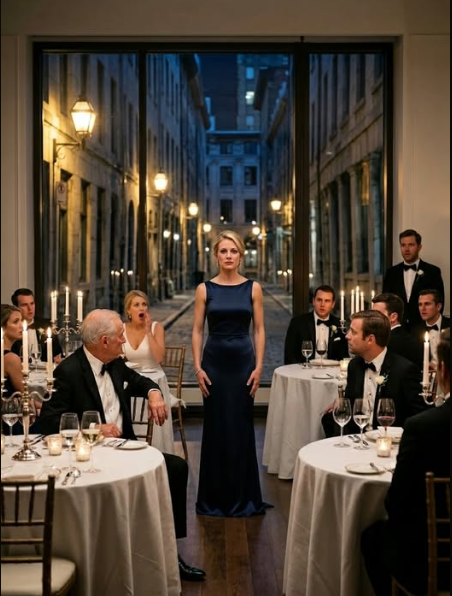
She was blond, blue-eyed, precocious, and loud in exactly the way adults mistake for confidence. She spoke early, read early, corrected adults early, and learned early that applause could be earned by being better than the person standing next to her. In preschool, she cried if another child got a sticker. In elementary school, she kept a list of grades posted on her bedroom wall. By middle school, she had become the family’s public achievement: straight A’s, debate trophies, violin lessons, student council, perfect posture, perfect handwriting, perfect thank-you notes.
I was the quiet one.
That was the phrase my mother used most often, as if quiet were a diagnosis. Elena is quiet. Elena is sensitive. Elena prefers books. Elena takes a while to warm up. Elena doesn’t like attention. Some of that was true. Most of it became true because everyone had already decided it was.
At family dinners, Victoria performed. I observed. She told stories about teachers praising her essays. I noticed which relatives looked bored. She announced her ambitions in polished paragraphs. I listened to adults lie politely to one another and wondered why nobody seemed to mind. Victoria wanted admiration. I wanted understanding. The world rewarded her faster.
By high school, she was the golden child with a calendar so crowded my parents discussed it like a military operation. Debate tournaments, honor society meetings, charity drives, summer programs, college visits. I had my own achievements, but they were quieter: essays published in the school literary journal, state-level mock trial awards, a perfect score on the verbal section of the SAT. Victoria treated every accomplishment of mine as a potential theft.
When I won a regional mock trial competition sophomore year, she said, “That’s cute. It’s not real debate, but it’s cute.”
When I was accepted into a summer law program, she said, “Just don’t get too excited. Those programs take anyone who pays.”
When my English teacher told my parents I had one of the strongest analytical minds she had seen in years, Victoria said, “Teachers always love the quiet kids because they don’t cause problems.”
My parents rarely corrected her. Not because they were cruel. That would make the story too easy. They were busy, status-conscious people who had learned to manage family conflict by praising Victoria and soothing me later.
“She doesn’t mean it,” my mother would say.
“Your sister is under a lot of pressure,” my father would add.
The result was simple. Victoria learned there were no consequences for diminishing me. I learned that defending myself cost more than silence.
At Georgetown, Victoria became exactly the person she had always planned to become. She studied political science, joined the right clubs, dated ambitious men, interned for people whose names impressed my parents, and perfected the art of sounding gracious while ranking everyone in the room. She came home for holidays speaking of “networks” and “social capital” and “the kind of people one needs to know.”
I went to the University of Virginia for college and then to law school at William & Mary. Not because I could not have applied elsewhere. Not because I lacked ambition. But because they offered me money, because I liked the faculty, and because I had already begun to understand that prestige was not the same as education.
Victoria called it settling.
“You could have tried for Georgetown Law,” she said one Christmas, swirling wine in my parents’ kitchen. “I mean, maybe you wouldn’t have gotten in, but at least you could have tried.”
“I liked William & Mary.”
She smiled. “That’s what people say when they’re making peace with their options.”
My mother gave me a warning look over the salad bowl. Don’t start.
So I didn’t.
I took out loans. I worked nights as a paralegal. I edited law review articles until two in the morning. I learned civil procedure in a library basement with vending machine coffee and highlighters that stained my fingers yellow. I learned criminal law from a former prosecutor who taught us that the state’s power was most dangerous when everyone in the room believed they were the good guys. I learned evidence from a judge who said, on the first day of class, “Truth is not what happened. Truth is what can be proven under rules people are willing to enforce.”
That sentence never left me.
After graduation, I clerked for Judge Frank Davidson of the United States District Court. He was brilliant, blunt, and allergic to laziness. Clerking for him was like being placed inside a machine that sharpened every thought before allowing it to leave your mouth. He tore apart my first draft opinion so thoroughly that I cried in the courthouse bathroom, then rewrote it overnight and earned the first nod of approval he ever gave me.
Victoria laughed when she heard about the clerkship.
“A clerk?” she said at a family brunch. “Isn’t that basically a legal secretary?”
“No,” I said.
My father looked up from his omelet. “What does a clerk do exactly?”
Before I could answer, Victoria said, “They help judges with paperwork. It’s respectable, I guess, if you want to stay academic.”
I remember looking at my parents then, waiting for one of them to ask me. Just ask me. Let me explain the prestige of the clerkship, the competitiveness, the responsibility, the fact that many elite legal careers began there.
My mother said, “Well, it’s wonderful Elena found something steady.”
Something steady.
I smiled and cut into my toast.
Judge Davidson saw more in me during that year than my family had seen in twenty-five. He gave me impossible assignments and expected me to meet them. He asked what I thought before telling me whether I was wrong. He taught me that precision was a form of respect. He wrote recommendation letters that opened doors I had not known existed.
Five years later, he became Attorney General of the United States.
Victoria still thought he had been some local judge who needed help filing papers.
After my clerkship, I joined the U.S. Attorney’s Office. I started in general crimes, then moved into violent crime, organized crime, and eventually public corruption. The work was exhausting, absorbing, and morally serious in a way private practice had never been for me. I stood in court for victims who had been ignored, for communities tired of being treated as evidence scenes, for taxpayers betrayed by officials who sold access behind closed doors. I also learned to fear the government’s power even while wielding it. A prosecutor who does not fear her own authority should be removed from office before lunch.
I won cases. A lot of them. I lost some too, and the losses taught me more sharply. Judges began to recognize me. Defense attorneys respected me even when they disliked me. Agents trusted me. Younger prosecutors came to my office for help with witness examinations. I became known for clean indictments, careful charging decisions, and cross-examinations that did not waste a word.
Victoria told people I was “doing okay for a government employee.”
At twenty-nine, I was recommended for the federal bench.
I laughed when Judge Davidson first raised it.
“Elena,” he said from behind his desk, then still a federal judge and not yet Attorney General, “do not insult me by pretending not to know you are qualified.”
“I’m twenty-nine.”
“You are young.”
“That is a polite way of saying twenty-nine.”
“You have more judgment than people twice your age.”
“I have less political support than people twice my age.”
“That can be solved.”
The vetting took eighteen months. Background checks. Interviews. Writing samples. Financial disclosures. Senate consultations. Questions about temperament, ideology, trial experience, published articles, professional associations, every address I had ever lived at, every job I had ever held, every person who might say under oath that I had once been rude in a grocery store. The process was invasive, humbling, and occasionally absurd.
I told my family I was still working as a prosecutor.
Part of me intended to tell them once the nomination became public. Then Victoria’s second engagement party happened.
She had divorced her first husband, Bradley, a corporate attorney, after deciding his partnership prospects were insufficiently impressive. Her second fiancé, Richard Ellison, was a pharmaceutical executive with a house in McLean and a habit of checking his phone while other people spoke. At their engagement party, held in my parents’ backyard beneath rented white tents, Victoria stood with a champagne flute raised and said, “I’m just grateful that at least one Monroe sister understands how to build a successful life.”
People laughed.
Not cruelly, most of them. Socially. Reflexively. The way people laugh when a beautiful woman makes a sharp remark and everyone assumes the target has agreed to be the target.
I was standing near the dessert table holding a plate with one untouched lemon bar on it. My mother looked embarrassed for half a second, then laughed too. My father pretended not to hear.
Three months later, I was confirmed by the Senate to a lifetime appointment as a United States District Judge.
I did not invite my family to the ceremony.
Judge Davidson, by then Attorney General Davidson, called personally afterward.
“Elena,” he said, his voice warmer than usual, “you earned this. Do not let anyone make you feel otherwise.”
I stood in my chambers after the call, looking at the seal on the wall, and thought about calling my mother. Then I imagined the questions. Why didn’t you tell us earlier? Why would you hide something this important? How could you embarrass Victoria by making this look secretive? Why did we have to find out with everyone else?
So I did what had become my habit.
I stayed quiet.
Thirteen years passed.
In those thirteen years, I presided over complex criminal trials, civil rights cases, major fraud actions, constitutional challenges, sentencing hearings that kept me awake at night, and emergency injunctions argued by lawyers who arrived with binders, panic, and too much caffeine. I wrote opinions cited by appellate courts. I was reversed sometimes and affirmed more often. I mentored law clerks who later became prosecutors, defenders, professors, and judges. I taught seminars. I spoke at conferences. I served on judicial committees. I developed a reputation, not glamorous but durable, for fairness, scholarship, patience, and the ability to make lawyers regret exaggerating.
My family thought I was a mid-level government lawyer making seventy-five thousand dollars a year.
Victoria thought I lived in a sad little apartment because I did not post pictures of my home online. In reality, I owned a renovated townhouse in Old Town Alexandria, bought carefully, renovated slowly, filled with books, art, and morning light. Victoria thought I drove an embarrassing five-year-old Camry because that was what I drove to family gatherings. She did not know about the vintage Mercedes in my garage, the one I drove on spring weekends along the Potomac. She thought I wore simple clothes because I could not afford better. She did not know that I considered obvious luxury a security risk and a bore.
She thought I was single because no successful man wanted a workaholic government employee.
She did not know about Michael.
Judge Michael Hartwell sat on the federal bench in Maryland. He was white, fifty, widowed, dry-humored, and patient in the way only a man who had survived real grief can be patient. We met at a judicial ethics conference and spent the first dinner arguing about sentencing discretion with such intensity that another judge asked whether we disliked each other.
We did not dislike each other.
For four years, we kept our relationship private. Not secret in the scandalous sense. Just private. Judges live under rules that make ordinary romance feel like administrative law. We disclosed when required, recused when necessary, and never appeared together in a way that would invite gossip from people who considered gossip a civic duty.
Victoria once asked if I was dating anyone.
“Maybe,” I said.
She gave me a pitying smile. “Elena, at your age, mystery isn’t intriguing. It’s concerning.”
I let that pass too.
By the time Victoria met Mark Reynolds, her third marriage was collapsing.
Richard Ellison had money, but not warmth. Victoria had status, but not contentment. Their marriage had become a house with beautiful windows and no furniture. They hosted dinners, appeared in photographs, attended fundraisers, and spoke to each other with the politeness of opposing counsel. When Richard left her for a younger woman who worked in biotech communications, Victoria described the betrayal as “socially humiliating,” which told me more than she intended.
Mark appeared six months later.
He was everything Victoria wanted at exactly the moment she needed to want something. Handsome, ambitious, from a respected family, educated at Princeton and UVA Law, employed by a firm with a name people recognized even if they did not know what it did. Most importantly, he was the son of Judge Thomas Reynolds.
I had known Judge Reynolds for years. Before my confirmation, I had argued before him twice on appeal. Afterward, we served together on judicial committees and panels. He was one of the most respected appellate judges in the country: brilliant, principled, occasionally intimidating, and possessed of a wicked sense of humor that surfaced at the driest possible moments. His wife, Margaret, was equally formidable. She had studied at Oxford, served on museum boards, chaired literacy initiatives, and could expose a social climber with three polite questions.
Victoria found out about Judge Reynolds on her second date with Mark and called me before the dessert course had probably been cleared.
“Elena,” she said, breathless, “Mark’s father is a federal judge.”
“That’s nice.”
“No, not like some ordinary judge. A federal appellate judge. Fourth Circuit. Do you know what that means?”
“Yes,” I said. “I know what that means.”
“Of course you don’t. It means he’s basically one step below the Supreme Court.”
“That’s one way people describe it.”
“It means Mark comes from a family that matters. Real influence. Real legal society. His father knows Supreme Court justices. His mother went to Oxford. They summer in Nantucket.”
“I thought you liked Martha’s Vineyard.”
“That was Richard’s circle. Nantucket is different.”
“I see.”
“You don’t, but that’s fine. I need you to understand something.” Her voice turned sharp. “This relationship is important. I cannot have you making me look ordinary.”
“Victoria.”
“I mean it. Mark’s family moves in circles you can’t even imagine. Federal judges, senators, CEOs, serious philanthropists. If you meet them eventually, please don’t do that thing where you act unimpressed because you don’t understand the room.”
I was sitting at my kitchen island in Alexandria, reading a draft opinion on a securities fraud case. Outside, rain moved softly against the windows. My robe hung upstairs in the closet. My chambers staff had gone home hours earlier. The next morning, I would sentence a former city official who had taken bribes from contractors and used the money for a vacation home he pretended not to own.
“Okay, Victoria,” I said.
“And don’t talk about your job too much. Don’t mention you work for the government. If anyone asks, say you’re in law. That’s technically true.”
“Technically.”
“And for God’s sake, buy a decent outfit. None of your clearance-rack blazers.”
I looked down at the cashmere cardigan I was wearing, which had cost an amount Victoria would have considered acceptable if the logo had been visible.
“I’ll keep that in mind.”
The next six months were fascinating in the way slow-motion accidents are fascinating when you are not permitted to warn the driver.
Victoria threw herself into becoming worthy of the Reynolds family. She joined the boards of three charities in one month, only one of which she had previously mentioned caring about. She began attending gallery openings and posting captions about “supporting the arts.” She hired a personal stylist whose main achievement seemed to be making her look as if she had always dressed that way. Her Instagram changed from luxury brunches and vacation photos to curated images of sophisticated dinner parties, museum steps, charity luncheons, and stacks of serious books arranged suspiciously close to unread.
She called me once a month with updates.
“Mark’s mother mentioned they vacation in Nantucket. I’m learning about Nantucket. Did you know there’s a difference between Nantucket and the Hamptons, Elena? Of course you didn’t. Mark’s father knows Senator Williams personally. They went to Yale together. Can you imagine? My future father-in-law knows senators personally.”
“I can imagine,” I said.
“I met Mark’s sister, Catherine. She’s a partner at a venture capital firm. A partner, Elena. She manages a four-hundred-million-dollar fund.”
“That’s impressive.”
“She asked where you work.”
“What did you say?”
“I said you’re in government law. I didn’t get specific.”
“How merciful.”
Victoria missed the tone. “Exactly. No need to overexplain.”
In March, I presided over a public corruption trial that made national news. A state senator had accepted bribes from developers in exchange for pushing zoning approvals through local channels. The trial lasted three weeks. Reporters filled the benches. The Washington Post covered my evidentiary rulings. The New York Times published a piece about the broader corruption investigation. Legal journals analyzed one of my jury instructions. At sentencing, I gave a twenty-minute statement about public trust that was quoted on three Sunday shows.
May you like



Victoria never mentioned it.
She did not read legal news.