In April, I was asked to speak at a Harvard Law symposium on federal sentencing reform.
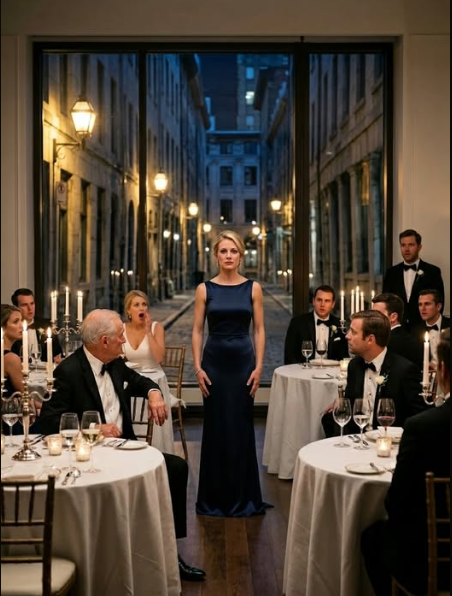
In April, I was asked to speak at a Harvard Law symposium on federal sentencing reform. Judge Reynolds was the keynote speaker. We had dinner with several other judges the night before at a quiet restaurant near Harvard Square, the kind of place with dark wood, soft lighting, and servers who knew when not to interrupt.
After the main course, Judge Reynolds turned to me over coffee.
“Elena,” he said, “I keep meaning to ask. Are you any relation to a Victoria Monroe in Arlington? My son Mark is engaged to a Victoria Monroe.”
I set down my cup. “She’s my sister.”
His eyebrows rose. “Your sister?”
“Yes.”
“Mark never mentioned that.” He studied me. “Does she know you’re a judge?”
I smiled faintly. “It’s complicated.”
Judge Reynolds leaned back. “Family doesn’t know.”
“No, sir.”
Around us, conversation continued, but his attention sharpened.
“That must be difficult,” he said.
I shrugged. “It’s easier this way. My sister needs certain things to be true about me. Letting her think I’m unsuccessful makes her happy. Everyone wins.”
Judge Reynolds frowned. “That’s not winning, Elena. That’s hiding.”
“With respect, Your Honor, it’s surviving.”
He did not push. Judges know when a witness has answered the question and when the next question would require a warrant. But I saw something in his expression then. Concern. Perhaps recognition. Perhaps the sadness of a man old enough to know that families can build entire houses out of silence and call them homes.
“Elena,” he said finally, “you should not have to make yourself smaller to keep someone else comfortable.”
“No,” I replied. “But many people do.”
He held my gaze for a moment, then nodded. “That does not make it right.”
In May, Victoria got engaged.
The proposal was elaborate, because subtlety had never interested my sister unless she could purchase it. Mark rented a private room at the Four Seasons, arranged a string quartet, ordered champagne with a label Victoria photographed before drinking, and had white roses flown in because she had once said red roses were too obvious. The proposal video appeared on Instagram within the hour. Victoria gasped, covered her mouth, cried prettily, and extended her hand toward the camera with timing so perfect I wondered whether there had been rehearsal.
She called me the next morning.
“It’s official,” she said. “I’m going to be part of the Reynolds family.”
“I saw. Congratulations.”
“Mark is already talking about me joining his mother’s foundation board. Can you imagine me on a board with federal judges’ wives and senators’ wives?”
“Yes.”
“Elena, try sounding excited.”
“I am happy for you.”
“That’s not the same.”
“No,” I said. “It’s better.”
She ignored that. “We’re having an engagement dinner next month. Small, intimate, just immediate family.”
I waited.
“Which means,” she continued, “I need you to come, of course. But Elena, I need you to understand, this isn’t like our family dinners. These are sophisticated people. Mark’s father has clerked for the Supreme Court. His mother studied at Oxford. They’re not going to understand your lifestyle.”
“There’s that word again.”
“My lifestyle, your lifestyle, our family’s less polished side. You know what I mean.”
“I’m not sure I do.”
She sighed. “The government job. The lack of success. The modest clothes. The old car. Just please don’t talk about work. Don’t mention money. Don’t embarrass me.”
I could have told her then.
I should have, perhaps. A kinder person might have. A braver person certainly would have. But I had spent so many years treating my private truth as a locked room that I no longer knew how to open the door without making it look like an attack.
So I said, “I’ll be on my best behavior.”
The weeks leading to the engagement dinner unfolded with the precision of a campaign.
Victoria sent me the dress code twice. Cocktail elegant, not business casual. She sent examples of acceptable colors, then texted, Maybe avoid black. It can look severe on you. She recommended a salon for my hair, a makeup artist “who understands mature faces,” and a boutique where, as she put it, “the salespeople won’t make you feel awkward if you explain your budget.”
I thanked her for the suggestions and ignored them.
Meanwhile, my docket did not pause for family drama. I handled motions in a complex antitrust case, sentenced three defendants in a healthcare fraud scheme, held a suppression hearing involving a questionable search warrant, and reviewed emergency filings in a First Amendment matter that arrived at my chambers after midnight. One of my clerks, Anna Whitfield, noticed I seemed distracted and asked whether everything was all right.
“My sister is getting engaged,” I said.
Anna smiled. “That sounds nice.”
“It has procedural complications.”
She laughed because she thought I was joking.
Michael knew the full story, or enough of it. One Saturday evening, he came over with Thai food and found me standing in front of my closet, looking at dresses as if one of them had filed a hostile brief.
“Wear the navy one,” he said from the doorway.
“You haven’t seen the options.”
“I know you. Wear the navy one.”
“Victoria says black looks severe on me.”
“Victoria sounds observant and unkind.”
“She is both.”
He walked in, set the takeout bag on a chair, and looked at me with that patient expression I found both comforting and irritating. “Are you going to tell her before the dinner?”
“I don’t know.”
“Elena.”
“I know.”
“Do you?”
I sat on the edge of the bed. “If I tell her privately, she’ll say I hid it to humiliate her later. If it comes out publicly, she’ll say I planned it to humiliate her. If I never tell her, I keep living inside a lie because it’s easier for everyone else.”
Michael sat beside me. “What do you want?”
The question was so simple I resented it.
“I want it not to matter,” I said.
“But it does.”
“Yes.”
“Then maybe the question is not how to make it painless. Maybe the question is how to stop volunteering for pain that isn’t yours.”
I looked at him. “You and Judge Reynolds have been talking?”
“No. But I like him more now.”
The night of the engagement dinner, I drove the Camry.
That was not humility. It was strategy. If I arrived in the Mercedes, Victoria would spend the evening either mocking the impracticality of a used luxury car or interrogating how I had paid for it. The Camry allowed her to relax into the story she preferred. I parked two blocks from the Jefferson Hotel and walked under a sky turning lavender over Washington. The city looked expensive and tired, like a woman wearing diamonds after a long argument.
In the hotel lobby, marble floors reflected chandeliers and the soft movement of guests. I checked my coat. A hostess led me upstairs to the private dining room, where Victoria had created a scene designed to look effortless at great expense.
There were white flowers, low candles, place cards in calligraphy, and a table arranged to signal intimacy while accommodating influence. Mark’s parents were there. His sister Catherine and her husband. Two close family friends who had known the Reynoldses for thirty years. My parents. Victoria’s best friend, Anne Mercer, whose loyalty depended entirely on proximity to power. And me.
My mother saw me first.
“Elena,” she said, crossing the room with a kiss that landed near my cheek. “You look nice.”
Nice. From Caroline Monroe, that was either praise or disappointment depending on the room.
My father hugged me briefly. “How’s work?”
“Busy.”
Victoria appeared before he could ask more.
“You came,” she said, as though there had been genuine doubt.
“I said I would.”
Her eyes moved over my dress, my shoes, my hair, assessing. “This is good. Understated. Very you.”
“Thank you.”
She leaned closer. “Remember what we discussed.”
“I remember.”
Then she guided me toward Mark.
Mark kissed my cheek and said, “Elena, glad you could make it.”
“Congratulations.”
“Thank you. Victoria’s been planning this like a military operation.”
“She’s always been gifted at campaigns.”
He laughed, not realizing how true that was.
Judge Reynolds stood across the room near the fireplace, speaking with my father. I saw the moment he recognized me, but he was too far away to intervene immediately. His expression changed just enough for me to know the countdown had begun.
Before he reached us, Victoria pulled me to the side and delivered the whisper that would become the last private insult she ever gave me.
“Don’t embarrass me. My fiancé’s father is a federal judge.”
Then everything happened.
Judge Reynolds crossed the room. He extended his hand. “Your Honor, it’s good to see you again.”
The glass shattered. The room stopped. The wine spread. Victoria’s face emptied.
I said my title out loud.
The first person to recover was Margaret Reynolds.
She moved forward gracefully, as if broken crystal and detonated family secrets were ordinary dinner complications. “Judge Monroe,” she said, taking both my hands. “What a pleasure. Thomas has spoken very highly of you.”
I smiled. “That’s kind of him. I’ve always admired his work.”
Victoria made another sound that might have been a laugh if laughter had been invented by a person in distress.
“Judge Monroe,” she repeated.
Mark looked at her. “Victoria, you didn’t tell me your sister was a federal judge.”
Victoria’s eyes snapped to me. “She didn’t tell me.”
Every person in the room heard the accusation.
I said, “That’s true.”
My mother’s hand flew to her throat. “Elena?”
My father stared at me with open confusion. “A judge?”
Anne Mercer whispered, not quietly enough, “Federal?”
Catherine Reynolds, Mark’s sister, looked between us with the calm interest of a venture capitalist watching a founder reveal hidden liabilities during due diligence.
Judge Reynolds’s expression had darkened. “Victoria, I must apologize. I assumed your family knew.”
Victoria’s smile returned in fragments. “Of course. Of course, we knew. I just didn’t realize Elena used that title socially.”
“I don’t,” I said.
She shot me a look. “Then perhaps this isn’t the time.”
Judge Reynolds looked at her sharply.
A waiter appeared with a cloth and dustpan. The broken glass was cleared. The wine was blotted. The table waited. No one knew whether to sit.
Mark said, “Maybe we should all have a drink.”
His mother replied, “That may be wise.”
We sat down.
Seating charts have a cruel intelligence. Victoria had placed me near the far end of the table, between Anne Mercer and one of Mark’s older family friends, safely away from Judge Reynolds, safely away from influence. But after the revelation, Margaret Reynolds looked at the place cards, lifted mine, and said, “Nonsense. Elena, you must sit near Thomas. You two will want to catch up.”
Victoria’s face tightened. “The seating was arranged—”
“For conversation,” Margaret said pleasantly. “And this will improve it.”
That was the moment I began to understand Margaret Reynolds. She did not raise her voice. She simply rearranged reality and allowed others to notice too late.
I ended up seated between Judge Reynolds and Catherine. Victoria sat across from me beside Mark, her posture so rigid she looked carved. My parents sat farther down, whispering urgently to one another. Anne kept glancing at her phone under the table, probably searching my name.
The first course arrived: a chilled spring pea soup with crème fraîche. No one tasted it immediately.
Judge Reynolds turned to me. “Elena, I read your opinion in the Harrington matter. Elegant handling of a difficult record.”
“Thank you. The record was less elegant than the final opinion suggests.”
He smiled. “They usually are.”
Catherine leaned in. “Which case was this?”
“A public corruption matter,” Judge Reynolds said. “State senator, development contracts, bribery issues.”
Catherine’s eyes widened. “That was yours? I read about that.”
Victoria set down her spoon with a tiny click.
“It received more attention than it deserved,” I said.
Judge Reynolds chuckled. “Judges always say that when their work receives exactly the attention it deserves.”
Mark looked at me as if seeing a person emerge from behind furniture. “You handled the Harrington trial?”
“Yes.”
“I thought Judge E. Monroe was a man.”
“So do several lawyers until the first hearing.”
Catherine laughed. Margaret smiled. Judge Reynolds looked pleased.
Victoria’s cheeks flushed.
Anne Mercer, having apparently completed her search, leaned forward from down the table. “Elena, there are articles about you.”
Victoria’s eyes closed briefly.
My mother said, “Articles?”
Anne, never one to waste a useful moment, read from her phone. “Judge Elena Monroe, appointed at twenty-nine, one of the youngest federal judges in the circuit. Known for public corruption and constitutional law decisions.” She looked up. “Elena, why have you never mentioned this?”
The question landed with the weight of a thrown object.
I took a sip of water. “It didn’t often seem welcome.”
My father frowned. “That’s not fair.”
“No,” Victoria said quickly. “It’s not fair at all. You hid this from us for years.”
“I did.”
“Why?”
The table went still.
There are questions families ask not because they want answers, but because they want the answer to be less damaging than what everyone already suspects. Victoria asked why as if the reason could somehow make her the injured party.
I looked at her across the candles. “Because every time I told the truth about my work, you made it smaller. When I clerked for Judge Davidson, you called me a secretary. When I became a prosecutor, you told people I had a modest government job. When I worked late nights on corruption cases, you said I lacked ambition. Eventually, I stopped offering you things to dismiss.”
Victoria’s lips parted.
My mother whispered, “Elena.”
I turned to her gently. “And when she did dismiss them, everyone allowed it.”
That was the sentence that moved the wound from sisterhood to family.
My father looked down at his plate.
Mark’s face had changed. He was no longer confused. He was embarrassed. Not for me. For Victoria.
Victoria forced a laugh. “This is ridiculous. Siblings tease each other. Elena has always been sensitive.”
Judge Reynolds set his spoon down.
It was not loud. It did not need to be.
“Victoria,” he said, “with respect, calling a federal clerkship secretarial work is not teasing. It is ignorance delivered with confidence.”
A small, stunned silence followed.
Margaret murmured, “Thomas.”
“No,” he said, still calm. “I have listened politely tonight, but precision matters.”
That was such a judge’s sentence that under any other circumstances I might have laughed.
Victoria stared at him as if he had slapped her. “I didn’t know.”
“You did not ask,” Judge Reynolds said.
Mark looked at his father. “Dad.”
Judge Reynolds leaned back, but his expression remained firm. “I apologize. This is your dinner. But I will not pretend the distinction is trivial.”
The second course arrived into a room that had lost all appetite.
Victoria tried to recover during the salad. She turned to Margaret and began speaking too brightly about the foundation board, about her interest in literacy, about how she had always believed in giving back. Margaret listened politely and asked, “Which literacy programs have you worked with most closely?”
Victoria blinked. “Well, I’m just beginning to formalize my involvement.”
“Of course. And what drew you to literacy specifically?”
“I’ve always loved reading.”
I looked down at my salad.
Catherine asked, “What are you reading now?”
Victoria hesitated.
Anne Mercer tried to help. “Victoria reads all the time.”
Catherine smiled. “Wonderful. What?”
Victoria said, “Mostly nonfiction.”
“What kind?”
“Biographies. Leadership. Culture.”
Margaret’s smile did not move. “Any particular title you recommend?”
Victoria reached for her wine, then remembered the previous glass and withdrew her hand. “I’d have to think.”
The conversation moved on, but not before everyone understood the answer.
The dinner became a study in controlled collapse.
Every effort Victoria made to display sophistication revealed preparation without substance. Every time she tried to diminish me, someone already knew better. When she mentioned that I “kept a low profile,” Judge Reynolds said, “Elena is widely respected precisely because she avoids unnecessary publicity.” When she joked that I had always been “married to government paperwork,” Catherine asked me about judicial independence and listened seriously to the answer. When she said our family was “proud, of course, even if Elena never shared much,” my mother flinched as if the words had found the bruise beneath her pearls.
Mark grew quieter with every course.
It was not only that Victoria had lied by omission. Couples survive omissions. It was not even that she had misrepresented my career. People exaggerate family stories all the time. What Mark was watching, in real time, was his future wife respond to another person’s success not with surprise, pride, or curiosity, but with panic and resentment. He was seeing the machinery behind her charm.
That is a terrible thing to see during your own engagement dinner.
By dessert, Victoria’s composure had thinned to transparency.
The waiter placed a lemon tart in front of me. I nearly laughed at the memory of the untouched lemon bar from her second engagement party years earlier. Life has a vulgar sense of symmetry.
Mark cleared his throat. “Elena, I’m sorry. I feel like I should have known this.”
“There’s no reason you would have.”
Victoria turned sharply. “I told you Elena was private.”
“You told me she worked in a low-level government legal office.”
My mother inhaled.
“I never said low-level,” Victoria replied.
Mark looked at her. “You did.”
Anne Mercer suddenly became fascinated by her dessert.
Victoria’s eyes shone now, not with grief, but with fury trapped behind manners. “I was trying to avoid making Elena uncomfortable.”
I looked at her. “Were you?”
She leaned forward. “You let me make a fool of myself.”
“No,” I said quietly. “You mistook me for someone you could safely belittle in front of people you wanted to impress. That is not the same thing.”
Her face hardened.
“There it is,” she said. “The judgment. You sit there like you’re above everyone.”
Judge Reynolds murmured, “She is literally a judge.”
Catherine choked on a laugh. Margaret gave her husband a look that failed to hide amusement. Under different circumstances, I would have appreciated it.
Victoria stood.
The chair legs scraped against the floor.
“I need some air,” she said.
Mark rose immediately. “Victoria—”
“No. I need a moment.”
She walked out of the dining room with the controlled speed of someone determined not to run.
For a few seconds, no one moved.
Then my mother stood. “I’ll go.”
I surprised myself by saying, “No.”
She looked at me.
“I’ll go.”
The hallway outside the private room was long, carpeted, and softly lit. At the far end, near a window overlooking the city, Victoria stood with her arms crossed, staring at nothing. Her shoulders were shaking, but when I approached, I saw she was not crying. She was furious.
“You planned this,” she said without turning around.
“No.”
“You knew Judge Reynolds would be here.”
“It is his son’s engagement dinner.”
“You knew he knew you.”
“Yes.”
“And you said nothing.”
“You asked me not to talk about my job.”
She spun around. “Don’t you dare.”
The hallway was empty except for us. For the first time all night, there was no audience. Victoria should have been safer there. Instead, she became crueler, because cruelty had always been easier for her in private.
“You humiliated me,” she hissed.
“I told the truth.”
“You let me walk into that room not knowing my own sister was some federal judge everyone apparently worships.”
“No one worships federal district judges, Victoria. Most people forget we exist until they’re angry about a ruling.”
“This is funny to you?”
“No.”
“You think you’re better than me.”
I looked at her then, really looked. At the expensive dress, the perfect hair, the trembling anger, the fear beneath it. My older sister was forty-five years old and still fighting a childhood contest no one else had agreed to continue.
“No,” I said. “I think you needed me to be worse than you.”
She recoiled.
“That’s not true.”
“It is.”
“You hid your life for thirteen years.”
“Yes.”
“Normal people don’t do that.”
“Normal families don’t require it.”
She laughed bitterly. “So now you’re blaming all of us.”
“I am describing what happened.”
“No, you’re rewriting history because tonight you finally got to be important.”
That one reached me. Not because it was true, but because it was familiar. Victoria had always known where to strike: not at the fact, but at the insecurity beneath it.
I took a breath.
“I was important when nobody in our family knew,” I said. “That is what you cannot stand.”
Her mouth tightened.
“I was confirmed to the federal bench at twenty-nine. You were at your second engagement party telling people at least one Monroe sister knew how to build a successful life. I sentenced corrupt officials while you told people I filed paperwork. I wrote opinions cited by appellate courts while you explained to me what a circuit judge was. I built a life while you used my supposed failure as furniture in yours.”
For once, Victoria had no immediate reply.
Down the hall, the muted sound of laughter rose from another private room. Somewhere, dishes clinked. The hotel went on being elegant around us.
Victoria’s voice lowered. “Why didn’t you tell Mom and Dad?”
“Because they believed you.”
That hurt her. I saw it.
“They would have been proud,” she said.
“Maybe. Eventually. But first they would have asked why I hid it. Then they would have worried about how you felt. Then the story would have become about managing your reaction.”
Her eyes flashed. “You don’t know that.”
“I know our family.”
She looked away.
For a moment, I thought she might soften. There was an opening then, small but real. A chance for honesty. She could have said she was sorry. She could have said she had been jealous. She could have said she did not know how to be happy for me because she had built too much of herself around being ahead.
Instead, she said, “Do you have any idea what you may have cost me tonight?”
And just like that, the door closed.
I stared at her. “Your engagement should not depend on my appearing unimpressive.”
“My engagement depends on trust. Mark is going to think I lied.”
“Did you?”
“I curated.”
I almost smiled. “That may be the most Victoria sentence you’ve ever spoken.”
She stepped closer. “Fix it.”
“No.”
“You will go back in there and say you prefer privacy and that I was respecting your wishes.”
“I do prefer privacy.”
“Then say I knew but didn’t mention it because you asked me not to.”
“No.”
Her face changed. “Elena.”
“No.”
“You owe me this.”
That sentence exhausted me more than all the others.
“I don’t,” I said. “I really don’t.”
I turned and walked back toward the dining room.
Behind me, Victoria said, “You’ve always been jealous of me.”
I stopped.
There were years when that accusation would have made me defend myself. Years when I would have turned around and explained, carefully, that I did not envy her marriages, her parties, her followers, her need to be admired by rooms that would forget her by morning. Years when I would have tried to prove my inner life to someone committed to misunderstanding it.
Instead, I looked back and said, “Victoria, I was tired of you.”
Then I returned to the table.
The mood in the dining room had shifted while we were gone. My parents looked shaken. Mark looked grim. Judge Reynolds looked disappointed, which is a heavier thing than anger when worn by a man who thinks carefully before judging. Margaret Reynolds had taken command of the table in that silent way of hers, steering conversation toward safer topics but not pretending safety had returned.
When I sat, Mark stood.
“I’m going to check on Victoria,” he said.
No one stopped him.
He left the room. We all pretended not to listen, which meant we listened harder.
Their voices were low at first. Then Victoria’s rose.
“I was protecting her privacy.”
Mark said something we could not hear.
Victoria replied, sharper, “You’re making this into something it isn’t.”
Another murmur from Mark.
Then Victoria, louder: “Because she likes being mysterious. She likes making people feel stupid.”
My mother closed her eyes.
Judge Reynolds looked at his plate.
Mark’s voice became audible. “You told me your sister was a disappointment.”
Silence.
Victoria said, “I never used that word.”
“You used worse ones.”
The room did not move.
When Mark returned, he was alone.
He sat down slowly and placed his napkin beside his plate. His face had the controlled blankness of a lawyer who had just learned damaging facts before trial.
“I apologize,” he said to the table. “Victoria is going to take a car home.”
Margaret’s expression barely changed, but her hand moved once toward her son’s before she stopped herself.
My father said, “Mark, I’m sure this is just a misunderstanding.”
Mark looked at him with surprising gentleness. “Mr. Monroe, I don’t think it is.”
No one finished dessert.
The dinner ended in fragments. People stood too quickly or too slowly. Coats were gathered. Polite phrases were spoken and died immediately. Margaret Reynolds hugged me before leaving.
“I’m sorry this happened tonight,” she said.
“So am I.”
She held my shoulders and looked at me. “No, dear. I’m sorry it had to happen this way. Those are different things.”
Judge Reynolds shook my hand.
“Elena,” he said quietly, “for what it’s worth, I should have asked before speaking.”
“You were kind.”
“I was careless.”
“You told the truth.”
He gave me a sad smile. “Truth has timing, unfortunately.”
Catherine handed me her card. “Lunch sometime. I mean that.”
“I’d like that.”
My parents waited near the door. My mother looked as if the evening had aged her.
“Elena,” she said, “we need to talk.”
“Yes,” I replied. “We do.”
“Not here,” my father said.
“No. Not here.”
I walked out alone into the June night.
Washington was warm and humid, the streets shining faintly from an earlier rain. I stood beneath the hotel awning and let the valet bring other people their cars. My phone buzzed. A message from Michael.
How bad?
I looked back through the hotel doors, where my parents stood in the lobby speaking urgently to each other, and Mark Reynolds stood alone near the front desk with one hand covering his mouth.
I typed back: Educational.
He replied: Want me to come over?
I stared at the message for a long time.
Then I wrote: Yes.
By the time I reached my townhouse in Alexandria, Michael was already there, sitting on the front steps with two coffees he must have bought on the way, because judges are practical romantics. He stood when I approached.
“Educational?” he asked.
“I may have understated.”
He handed me a coffee. “Did anyone throw anything?”
“Victoria dropped a wine glass.”
“Accidentally?”
“At first.”
We went inside. I took off my heels at the door and stood barefoot in my entryway, suddenly so tired that even speaking felt excessive. Michael followed me into the kitchen and waited while I put the coffee on the counter untouched.
Then I started laughing.
Not because it was funny. Because my body had chosen the least dignified available exit for shock.
Michael watched me carefully. “Should I be concerned?”
“Yes.”
I laughed harder. Then, without warning, I cried.
He crossed the room and pulled me into his arms. I cried against his shirt with an intensity that embarrassed me even as it happened. I cried for the dinner, yes, but also for the years before it. For every family meal where I had swallowed the correction. For every achievement folded small and placed in a drawer. For the ceremony my parents had missed. For the part of me that had confused privacy with protection. For the young woman I had been, standing in chambers after confirmation, choosing silence because it seemed easier than asking to be seen.
Michael did not tell me to calm down. He did not say it was over. He just held me and let the storm pass through.
When I could breathe again, he said, “You know this wasn’t your fault.”
“I know that intellectually.”
“Judicial notice?”
“Denied.”
He smiled into my hair. “Harsh ruling.”
The next morning, my mother called at 7:12.
I let it go to voicemail.
My father called at 7:19.
I let that go too.
Victoria did not call.
At 8:03, my mother texted: Please call us. We are confused and hurt.
I stared at the words while standing in my kitchen in a robe, coffee cooling beside my hand. Confused and hurt. Not proud. Not sorry. Not how did we miss this? Confused and hurt. It was amazing how quickly my success had become something I had done to them.
I had a hearing at ten, so I dressed, drove to court, and became Judge Monroe because Judge Monroe had obligations Elena Monroe could not postpone.
That morning’s hearing involved a contract dispute between two defense contractors, both represented by lawyers who believed volume could substitute for clarity. I listened, asked questions, issued a ruling from the bench, and watched one lawyer realize halfway through my explanation that his best argument had collapsed under its own footnotes. It was satisfying in the small professional way ordinary competence can be satisfying after personal chaos.
During lunch, I sat alone in chambers. My clerks knew something was wrong but were too well-trained to ask. Anna placed a sandwich on my desk and said, “You forgot to eat yesterday too.”
“Thank you.”
She hesitated. “There are photographers outside.”
I looked up.
“Not many. Two. Maybe three.”
Of course.
By noon, Anne Mercer or someone like her had leaked the engagement dinner story. The headline on a legal gossip site was both tacky and efficient: FEDERAL JUDGE REVEALED AS “SECRET SISTER” AT HIGH-SOCIETY ENGAGEMENT DINNER.
By two, mainstream outlets picked it up with more restraint. By four, social media had done what social media does: flattened complexity into teams. Some people called me dignified. Others called me deceptive. Some said Victoria was cruel. Others said I had engineered a public humiliation. A surprising number of lawyers posted about the prestige of federal clerkships, which felt like the least useful but most legally predictable discourse.
Carter from my chambers buzzed in. “Judge, Chief Judge Whitman is on line one.”
Chief Judge Alice Whitman supervised our district with the calm menace of a grandmother who had survived twelve Senate hearings and three courthouse renovations. I picked up.
“Elena,” she said, “I assume you have seen the nonsense.”
“Yes.”
“Are you all right?”
“I am.”
“That was not a legal question.”
“I’m managing.”
“Good. The court’s public information officer will issue no comment beyond confirming your biography, which is public record and apparently news to people with internet access.”
Despite everything, I smiled. “Thank you.”
“And Elena?”
“Yes?”
“I knew your family did not attend your investiture. I always wondered. I’m sorry.”
The kindness almost undid me.
“Thank you, Chief.”
At six, after the last order was signed and the courthouse had begun emptying into evening, I called my parents.
My mother answered before the first ring finished.
“Elena.”
“Mom.”
Your father is here,” she said, as if that made the call more official.
“Put me on speaker.”
A rustle. Then my father’s voice. “We’re here.”
For a moment, none of us spoke.
My mother began. “We don’t understand.”
“I know.”
“How could you not tell us?”
“I should have.”
“Thirteen years,” my father said. His voice was quieter than I expected. “You became a federal judge and didn’t tell your parents.”
“I did not include you. That is true.”
“Why?”
I looked out my chambers window at the courthouse plaza. People moved below in small streams, free from knowing any of this mattered.
“Because I did not trust you to be proud of me without first making it about Victoria.”
My mother gasped softly. “That is unfair.”
“Is it?”
“Yes.”
“Mom, at Richard’s engagement party, Victoria said at least one Monroe sister had built a successful life. You laughed.”
Silence.
“That was years ago,” she said.
“It was three months before my confirmation.”
My father cleared his throat. “We didn’t know.”
“You didn’t ask. You rarely asked. You accepted Victoria’s version because it was easier and because it fit the roles we had all been assigned.”
“Elena,” my mother said, crying now, “we loved you.”
“I know. But love is not the same as attention.”
That sentence seemed to move through the line and settle somewhere none of us could avoid.
My father said, “I’m sorry.”
It was not dramatic. It was not enough. But it was real.
My mother cried harder. “I am too. I don’t know what to say.”
“Then don’t say much yet.”
“What do we do?”
“We start telling the truth.”
Another silence.
My father asked, “Is Victoria all right?”
There it was. The reflex. The old orbit.
I closed my eyes.
“I don’t know,” I said. “But for once, I’m not going to be responsible for that first.”
My mother whispered, “You’re right.”
I wanted to believe her.
Victoria called three days later.
I was at home, reading on the back patio with the discipline of someone pretending not to wait. Her name appeared on my phone, and for a moment I considered letting it disappear. Then I answered.
“Hello, Victoria.”
“You ruined my life.”
No greeting. No hesitation. Just the thesis.
“That seems unlikely.”
“Mark postponed the wedding.”
“I’m sorry.”
“No, you’re not.”
“I am sorry you’re hurting. I’m not sorry the truth came out.”
She laughed bitterly. “The truth. You keep saying that like you didn’t manipulate the whole evening.”
“I attended a dinner you invited me to.”
“You sat there while everyone judged me.”
“Victoria, you introduced me as a failure for years. One evening of accurate information felt like judgment only because the contrast was dramatic.”
“You think you’re so clever.”
“I think I’m tired.”
She was quiet for a second.
Then she said, “Mark says he needs time.”
“That may be wise.”
“He says he doesn’t know whether he knows me.”
I said nothing.
“Do you know what that feels like?” she demanded.
“Yes.”
The answer stopped her.
For a moment, I heard only breathing.
Then she said, softer but no less angry, “Why did you let me believe it?”
“Because correcting you never changed you. It only made you crueler.”
“That’s not fair.”
“Maybe not. But it’s true.”
“You could have trusted me.”
“No,” I said. “I could not.”
There are moments in every relationship when the final shape of it appears briefly, like a landscape revealed by lightning. That was one of ours. For the first time, Victoria seemed to understand not that I had hidden a job, but that I had withheld trust. And trust, unlike information, cannot be demanded retroactively.
She said, “I don’t know how to fix this.”
It was the first honest thing she had said.
I leaned back in my chair and looked at the small garden behind my townhouse, the hydrangeas just beginning to bloom.
“Start with one sentence,” I said.
“What sentence?”
“You know which one.”
Silence.
I heard her breath catch. I waited.
“I’m sorry,” she said finally, but the words came out stiff, like furniture dragged across a floor.
“For what?”
“Elena.”
“For what, Victoria?”
She exhaled sharply. “For underestimating you.”
“That is not the same as what you did.”
Another silence. Longer this time.
“For belittling you,” she said. “For lying about you. For making you smaller because it made me feel safer.”
I closed my eyes.
There it was. Not graceful. Not complete. But closer to the center.
“Thank you,” I said.
“Does that fix it?”
“No.”
Her small laugh sounded almost human. “Of course not.”
“No,” I said. “But it begins something different if you let it.”
In the months that followed, the engagement did not immediately recover.
Mark and Victoria entered counseling separately and then together. I knew this because Victoria told my mother, my mother told me accidentally, and then apologized for gossiping in the same breath. Mark moved out of Victoria’s Arlington condo for six weeks. The wedding planner was told to pause deposits. The foundation board invitation disappeared into a silence so polite it might as well have been shredded stationery.
Victoria, for the first time in her adult life, became less visible online.
Her Instagram slowed. Then stopped. Then returned with fewer photographs of champagne and more photographs of actual charity events where she appeared in the background rather than centered in silk. Whether this was growth or strategy, I did not know. People change unevenly, and sometimes the early stages look exactly like better branding.
My parents came to my courthouse.
It was my father’s idea, which surprised me. They asked if they could observe a hearing. I said yes. They sat in the back row during a sentencing in a fraud case. It was not dramatic. No shouting. No thrilling cross-examination. Just a man in a gray suit standing before the court while his lawyer argued for mercy, the prosecutor argued for accountability, and I tried to explain a sentence that balanced harm, intent, deterrence, and the possibility that human beings are more than the worst thing they have done.
Afterward, my parents came to chambers.
My mother stood beneath the seal on the wall and looked at my nameplate: THE HONORABLE ELENA G. MONROE.
She touched it with two fingers.
“I missed this,” she said.
I knew she did not mean the room.
“Yes,” I said.
My father looked at the shelves of law books, the framed photographs with clerks, the awards I had never displayed at home because home had not felt like a place that wanted them. His eyes were wet.
“I’m proud of you,” he said.
I believed him.
I also knew pride arriving late does not erase absence. But it can still be received, if not as payment, then as evidence of movement.
Victoria and I did not become close overnight. We were not those sisters in movies who cry once and spend the next scene laughing over wine. Real repair is boring, repetitive, and often awkward. She called sometimes and did not mention herself for nearly five minutes. I told her small truths and watched what she did with them. She asked about my work carefully, sometimes too carefully, as if approaching a skittish animal. I answered more than I used to, less than she wanted.
One afternoon in September, she came to my townhouse for lunch.
It was the first time she had ever been there.
She stood in my entryway, taking in the restored floors, the art, the high shelves, the garden visible through French doors.
“You own this?” she asked.
“Yes.”
“It’s beautiful.”
“Thank you.”
She looked embarrassed. “I thought you lived in an apartment.”
“I know.”
We ate salad in the garden because I did not trust either of us with a formal dining room. For a while, we spoke of our parents, of Mark, of Catherine Reynolds, who had indeed taken me to lunch and proved even sharper and funnier than expected.
Then Victoria said, “I told people things about you because I needed them to be true.”
I set down my fork.
She looked at the table. “If you were successful, then I had to ask what all my performing was for.”
It was the kind of sentence people pay therapists to help them reach.
“And?” I asked.
She gave a small, humorless smile. “I’m still asking.”
I felt something in me loosen. Not forgiveness exactly. Forgiveness is too often treated like a door that must swing open all at once. This was more like unlatching a window.
“That’s a better question,” I said.
She nodded.
“Mark and I are still not sure,” she admitted.
“About the wedding?”
“About us.” She looked toward the garden wall. “He says he can forgive ambition. He can forgive insecurity. He doesn’t know if he can marry contempt.”
I said nothing, because Mark had identified the issue with appellate precision.
Victoria wiped at one eye, annoyed by the tear. “I don’t want to be contemptuous.”
“That’s good.”
“But wanting not to be something is not the same as not being it.”
“No,” I said. “It’s not.”
She laughed softly. “You always answer like a judge.”
“I am one.”
This time, she smiled without flinching.
In November, Mark ended the engagement.
Victoria told me before she told our parents. That alone felt like evidence of a changed world.
“He said he loves me,” she said on the phone, voice flat from crying, “but he doesn’t trust the version of himself he becomes when he’s with me.”
“That sounds painful.”
“It is.”
“I’m sorry.”
“I know you are.”
I heard the difference. She believed me.
“He also said,” she continued, “that I need to build a life I don’t have to narrate so aggressively.”
Despite myself, I smiled. “I like Mark.”
“I know. So do I.”
There was no dramatic reconciliation with the Reynolds family because there was no longer a wedding to require one. But months later, Judge Reynolds invited me to sit on a judicial education panel he was chairing. During the reception afterward, he handed me a glass of sparkling water and said, “How is your sister?”
“Learning,” I said.
“Aren’t we all.”
Margaret Reynolds approached then and said, “Thomas, stop sounding like a commencement address.”
He looked at me. “You see what I endure.”
I laughed.
In January, Victoria attended one of my public lectures.
She sat in the third row of a law school auditorium while I spoke about sentencing, discretion, and the moral danger of reducing defendants to their worst acts while reducing victims to their worst injuries. Afterward, she waited until the students finished asking questions. Then she approached me with a program folded in her hands.
“You’re very good,” she said.
“I know.”
Her eyes widened, then she laughed. Truly laughed.
“Good,” she said. “You should know.”
We walked out together into a cold evening. Students passed us on the sidewalk, talking about exams, clerkships, dinner plans, lives still undecided. Victoria pulled her coat tighter.
“I used to think confidence meant making sure everyone saw you winning,” she said.
“What do you think now?”
“I think maybe it means not needing a witness every time.”
“That’s not bad.”
“Don’t sound so surprised.”
“I’m a little surprised.”
She bumped my shoulder lightly with hers. It was such a sisterly gesture, so ordinary and unfamiliar, that for a moment I did not know what to do with it.
A year after the engagement dinner, my family came to my investiture portrait unveiling.
Federal judges do not get many ceremonial second chances, but Chief Judge Whitman had insisted that my official portrait, delayed for years due to renovations and scheduling conflicts, deserved a proper gathering. My parents attended. Michael attended, openly now, because privacy no longer felt like hiding. Victoria attended alone, in a simple navy dress without dramatic jewelry. She brought no entourage, posted nothing, and cried when I thanked Judge Davidson in my remarks.
After the ceremony, she stood before my portrait for a long time.
The artist had painted me in chambers, seated but upright, robe draped in black lines, hands resting on a closed book. I had worried the portrait made me look severe. Michael said it made me look like I knew where the bodies were buried. Chief Judge Whitman said that was basically the same thing.
Victoria looked at it and said, “This is how you always looked, isn’t it?”
“What do you mean?”
“Like yourself. I just refused to see it.”
I stood beside her.
“Maybe,” I said.
She glanced at me. “I’m sorry I missed so much.”
This time, there was no stiffness in the apology. No demand that forgiveness follow immediately. No attempt to make the sentence smaller.
“I’m sorry too,” I said.
“For what?”
“For deciding silence was easier and letting it turn into distance.”
Victoria nodded. “We were both cowards in different outfits.”
I laughed. “That is unfortunately accurate.”
Across the room, our parents were speaking to Michael. My mother was laughing at something he said. My father kept looking at the portrait, then at me, as if still adjusting to the size of what he had not known. There was sadness in that. But there was also presence. Late, imperfect, insufficient, and real.
That evening, after everyone left, I returned alone to my chambers.
The courthouse was quiet. The cleaning staff moved somewhere down the hall. The city beyond my window glowed with winter light. My robe hung on the back of the door. My desk was covered with draft opinions, sentencing memos, and a handwritten note from Victoria.
I picked it up again.
Elena,
I spent years needing you to be smaller because I was afraid there was nothing real underneath the version of myself I had built. That was my failure, not yours. I am proud of you. I am also sorry that pride arrived so late. I don’t expect it to fix everything. I just wanted to write it down so you would have proof when my voice fails.
Victoria.
I folded the note carefully and placed it in the top drawer of my desk.
Then I sat in the quiet room where I had spent so many years being exactly who I was, whether my family knew it or not. I thought about the engagement dinner, the broken glass, Judge Reynolds’s extended hand, Victoria’s face when the truth entered the room without asking permission. For a long time, I had believed that moment was the night my sister’s world fell apart.
I understood differently now.
It was the night the performance cracked. Not just hers. Mine too.
Victoria had performed superiority. I had performed indifference. My parents had performed neutrality. We had all mistaken our roles for peace. But peace built on one person’s erasure is not peace. It is merely quiet with better manners.
People often imagine truth as a weapon, and sometimes it is. That night, truth cut. It embarrassed. It exposed. It ended an engagement that perhaps should never have become one. But truth is also a door. Not a gentle one. Not always a door someone opens politely. Sometimes it flies off its hinges in a room full of chandeliers while a wine glass shatters on the floor.
But after the noise, if people are willing, there is air.
I looked at my reflection in the darkened window. Judge Elena Grace Monroe looked back at me, older than the woman who had accepted confirmation in secret, steadier than the girl who had let her sister speak first at every dinner. She looked tired. She looked strong. She looked like someone who had finally stopped confusing being unseen with being safe.
My phone buzzed.
A message from Victoria.
Dinner Sunday? No agenda. No performance. Just sisters, if you’re willing.
I stared at it for a moment. Then I typed back.
Yes. But I’m choosing the restaurant.
Her reply came quickly.
As long as it’s not too government employee.
I smiled despite myself.
Careful, I wrote. I sentence people for less.
She sent back a laughing emoji, and for once, it felt like laughter instead of strategy.
I turned off the desk lamp, gathered my coat, and stepped into the courthouse hallway. The marble floors reflected the soft security lights. My heels echoed as I walked toward the elevators, not loudly, not dramatically, just steadily. Outside, Washington waited in all its ambition and contradiction, its polished rooms and private humiliations, its appetite for power and its occasional capacity for grace.
The next morning, I would return to the bench. I would listen. I would question. I would rule. Lawyers would call me Your Honor, not because I needed the title to exist, but because the role required formality and the law required structure. My family would continue learning who I was. Victoria would continue learning who she might become without needing me beneath her. None of it would be simple. Most worthwhile things are not.
But that night, walking out beneath the courthouse columns, I understood something I wish I had understood years earlier.
You do not become more impressive by making yourself acceptable to people committed to misunderstanding you.
You do not become kinder by letting cruelty keep its favorite chair at the table.
And you do not protect a family by hiding the truth so completely that love has nothing real to hold.
The truth had entered late.
May you like


But it had entered.
And this time, I did not lower my voice.