Final Continuation — The Life That Comes After Silence
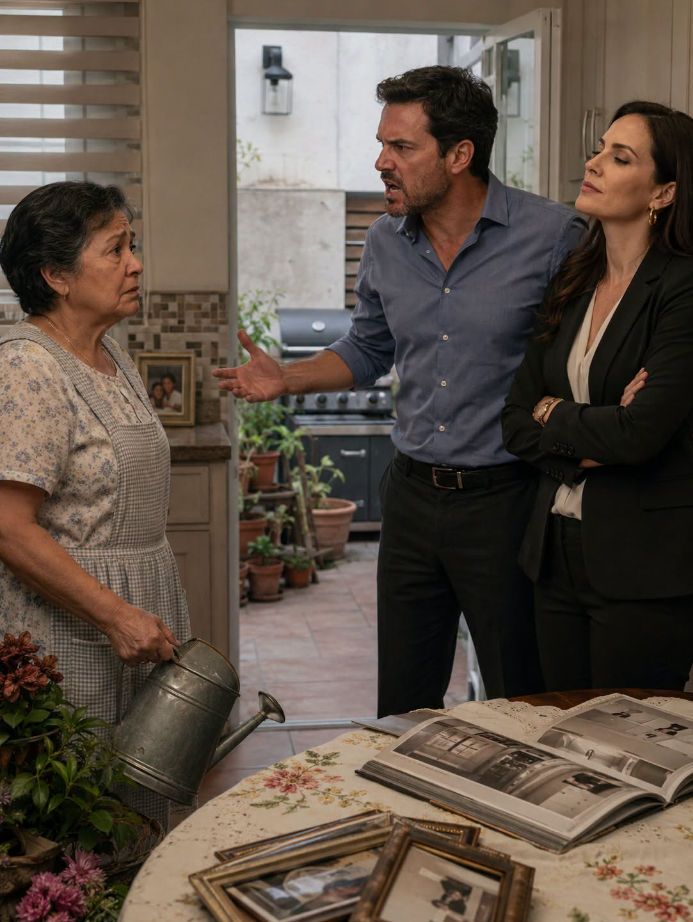
Spring arrived slowly that year, the way healing does when it has no interest in being rushed.
The house changed again—but this time, it changed gently, as if asking permission from the woman who had built it.
The sharp metallic blinds were replaced with soft fabric curtains I chose myself. Not Cristina’s. Not anyone else’s taste. Mine. The sunlight returned in a warmer way, as though the rooms remembered how to breathe.
Ricardo helped with small repairs at first.
Not because I asked him to—but because he could not seem to sit still anymore without doing something that mattered.
One afternoon, I found him repainting the porch railing.
“I didn’t realize how gray everything had become,” he said quietly.
I didn’t answer right away. I just watched him work.
Gray had not been the house’s color.
Gray had been what it became when I stopped being seen inside it.
Cristina did not return.
There were no dramatic phone calls. No final confrontation. Just a signed separation and a silence that did not demand explanation. I did not celebrate her absence. That would have meant she had held more power than she truly did.
Instead, I cleaned the house slowly, room by room, not erasing her presence, but restoring mine.
The kitchen shelves came down from unreachable heights.
My photographs returned to their places.
And the garden—my garden—became alive again.
But the most unexpected change was Ricardo.
He did not try to become the son he used to be.
He became something different.
Quieter.
More aware.
One evening, as we sat on the porch, he finally said what had been sitting inside him for weeks.
“I was ashamed,” he admitted. “Not just of what I let happen… but of how easily I believed it when she said you were difficult.”
I kept my eyes on the garden.
“I know,” I said softly.
He looked down at his hands.
“You never deserved that.”
That sentence did not fix anything.
But it opened something.
For a long time, neither of us spoke. The silence this time was not heavy. It was honest.
The Letter That Never Needed to Be Sent
A month later, I received a letter.
No return address.
I already knew who it was from.
Cristina.
I did not open it immediately. I left it on the table for hours, watching it as if it might change shape if I stared long enough.
Eventually, I opened it.
The handwriting was precise, controlled—just like everything she had ever done in my house.
It was not an apology in the way people expect apologies.
It was an admission.
“I believed I was building a life with Ricardo.
I didn’t understand I was trying to replace someone who was never meant to be replaced.
I thought control was the same as belonging.
I was wrong.”
There was no plea to return.
No attempt to justify.
Just recognition.
And at the end:
“I hope you get your house back.”
I folded the letter carefully.
Not because I forgave her.
But because I no longer needed to carry her misunderstanding inside my home.
The Garden Ceremony
That summer, something small but meaningful happened.
Ricardo asked if we could plant something new in the backyard.
Not replace the roses.
But add to them.
“I want to help you build it properly this time,” he said.
We chose jasmine.
Gabriel used to say jasmine smelled like memory that refused to fade.
As we planted it together, Ricardo suddenly stopped.
“Do you ever think about him?” he asked.
“Every day,” I said.
He nodded.
“I wish I had known him longer.”
I smiled faintly.
“He is in everything you are trying to fix,” I said. “That’s enough.”
We finished planting in silence.
When we stood up, the soil was under our nails, our clothes stained, our hands tired.
But something in the yard felt different.
Not restored.
Not repaired.
Continued.
Final Scene — A House That Finally Belongs to Itself
Years do not heal everything.
But they soften what refuses to break.
Ricardo never left again, but he also never tried to own the space I had built. He learned the difference between living in a house and belonging inside it.
And I learned something I had forgotten long ago.
That endurance is not the same as disappearance.
One evening, as the sun fell across the garden, Ricardo brought two cups of tea outside.
He placed one beside me without asking.
A small thing.
But it mattered.
“I was thinking,” he said carefully, “someday, when you’re ready… this house should still stay in the family.”
I looked at him for a long moment.
Then I looked at the roses.
At the jasmine.
At the soil that had held both grief and love without choosing sides.
“This house already belongs to the family,” I said.
He nodded.
I continued, softer:
“But I am still alive in it.”
That was the difference.
Not ownership.
Not control.
Presence.
May you like

And for the first time in a very long time, I felt no need to fight to exist inside my own home.
Because now, I already did.